Showing posts with label WarnerMedia. Show all posts

Feb 14, 2020

The Best of Charlene Weisler in MediaVillage

I am thrilled to see a "Best Of" email blast of my top articles in MediaVillage from 2019.


MediaVillage logo


Featured Commentaries from MediaVillage.com

Unlocking the Addressable Future

Unlocking the Addressable Future

By Charlene Weisler
for Media Insights
Addressable TV ad spend is on a tear, according to eMarketer, increasing from $760 million in 2016 to a projected $3.49 billion by 2021. The advantages that addressable offers both buyers and sellers… Read more
TV Measurement in a Digital World

TV Measurement in a Digital World

By Charlene Weisler
for CBS InSites and Media Insights
In a highly fragmented media world, where the consumer is at the cutting edge of media consumption, media measurement and attribution can be a moving target. How does the industry keep up? Several in… Read more
Next Big Data-Driven Ad Opportunity? Sports, Says Xandr and WarnerMedia

Next Big Data-Driven Ad Opportunity? Sports, Says Xandr and WarnerMedia

By Charlene Weisler
for Media Insights
For some, according to consultant Mike Shields, when you think of sports advertising it generally consists of "big brands doing tentpole sponsorships. Sports doesn't scream data technology and progra… Read more
Just in Time for the Upfront, A+E Guarantees Audience-Based Advertising

Just in Time for the Upfront, A+E Guarantees Audience-Based Advertising

By Charlene Weisler
for A+E Networks InSites and Media Insights
The folks at A+E Networks understand the value of a well thought out process.  As they announce the launch of their audience-based advertising solutions for both digital and linear platforms, all of … Read more

Jan 29, 2020

The Many Challenges for Media Technology Departments


With all of the change and transformation taking place in the media industry today, we may tend to forget that there is one area of expertise that is under great pressure to get it done, get it right and get it within the budget as quickly as possible. That would be corporate technology departments who must find efficient, successful methods to build the systems that will drive the business and that, oh by the way, will not become obsolete just as it is completed. It is quite a feat!

This week I attended an off-the-record roundtable on this subject that included representatives from such companies as AMC, Charter, Disney, Google, Legends, NBCU, Nielsen, NY Times, NPD Group, Ogilvy, Scholastic, Vice and WarnerMedia. This event, sponsored by Eliassen Group and hosted by WarnerMedia, shed light on the challenges that technology departments face in building and off-loading measurement and sales systems. With the ever expanding range of data sets (that sometimes have to be normalized and cleansed) to addressable and programmatic advertising sales components (that need to be built into current sales, inventory and traffic systems) to the promises of groundbreaking custom media systems (that cross siloed internal departments), there is a lot that can go wrong or miscalculated. And let’s not forget the need to comply with ever-evolving privacy legislation.

Organizing and Managing Project Teams
How does a CTO start to herd all the cats in a major technology project cross company? To some, this was less of a challenge in smaller companies than in larger ones. “A small company is federated,” noted one attendee. For those in larger corporations, “small agile teams,” might be the way to start but there needs to be some type of centralized body or council so the governance doesn’t slip and a set of corporate standards to set general parameters and deliverables.

Collaboration tools can be an unexpected challenge. According to another participant, tools can vary within a company. “Some use Slack,” he noted, but other departments use other systems. “Some don’t use Hangout.” Picking the right collaboration tools is pivotal, noted another attendee, so that the technical tools “get normalized.” There is great value in being proactive by immediately training in any collaboration tool when on-boarding a project. Sometimes rejection exists simply because the person doesn’t know how to use it. One executive suggested incentivizing employees and offered the following example: In moving from Office, her company offered Amazon gift cards to those employees who made the change.

Privacy
In the discussion of privacy, the thought was that, as CCPA goes into effect and with GDPR, advertisers would have to go back to contextual advertising from more personalized targeting.
For one participant, the irony is that as the TV side of the market becomes more addressable, it is possible that digital may become more contextualized.

Most agreed that it was a “hard regulatory environment,” where CCPA is the first salvo but not the last. One executive added that there were different criteria depending on the legislation – opting in for GDPR or opting out for CCPA. Anecdotally, she noted that, “with GDPR there is some blindness to opt-in. Consumers in 40% to 50% of cases ignore it” which is, “similar to ad blindness,” although there is no feedback as of yet on CCPA. And with legislation going out state by state it is really an, “evolving story.”

For another attendee, the concern is “reputational risk,” where we need to ascertain exactly what is going out to the consumer. “Where have you pulled the personal information and what are you doing with it? What are the exceptions?” It all must be within scope. His company demands privacy on enterprise level but individual nets may manage risk in different way and is “operated in a siloed manner” because of all of the different businesses they own. For another company that offers subscription streaming services, the consumer can delete their data but then they do, they are unsubscribed.

Privacy legislation could impact recommendation engines. Services like Chrome will be phasing out of cookies. Both of these situations present their own challenges in tracking consumers. As a result, some participants believe that this will result in more of a move to subscriptions.

Direct to Consumer Model
Being content with the status quo is not an option nowadays. For one executive, “We’ve had such a stable model for such a long time, you didn’t need to change anything. It just worked.” Now, faced with strict functional silos and the need to think differently, change management has been a challenging process and their current informal structure will be forced to evolve.

For some, the impact of mergers, purchases and consolidations creates a much larger company that needs to focus on assembling the organization within an aggressive time line. Content Rights is also undergoing a shift. It used to be more profitable to “split rights and sell them off to different parties. But now there is a scramble to re-aggregate these rights.”

In a world of cord-cutting, is there a future for cable television? For many, the answer is yes by upgrading the network to offer higher speed for gaming and more experiential content with aggregation being a solution for brands and distribution. “It’s a fun time to be in the distribution business. I don’t see the cable companies going away. Where would you go,” one participant stated.

As viewers increasingly watch individual programs and may not be aware of the network it is on, branding will be more and more pivotal going forward. “There is always a market for high end production,” concluded an attendee … as long as the consumer knows where it originates.

This article first appeared in www.MediaVillage.com

Dec 13, 2019

Getting Deep into Sports Data-Driven Advertising Opportunities with Xandr and WarnerMedia


Next Big Data-Driven Ad Opportunity? Sports, Says Xandr and WarnerMedia
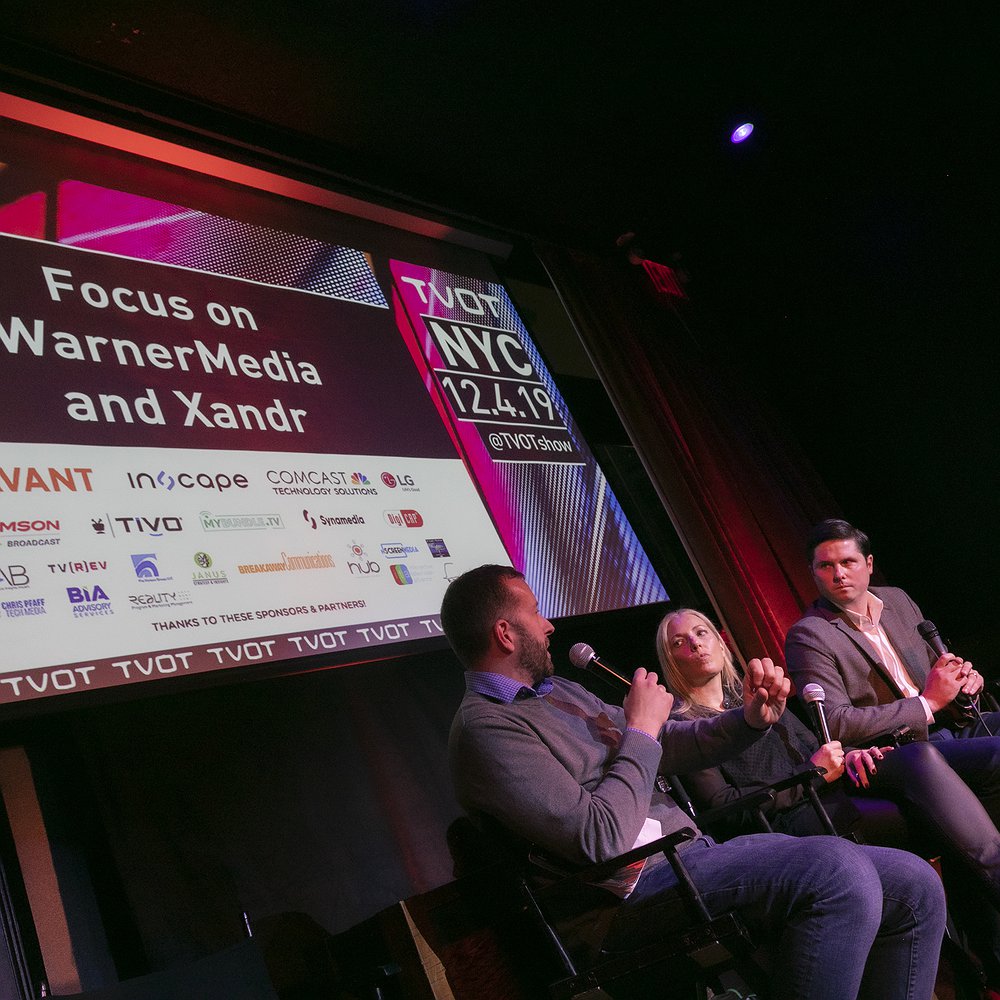
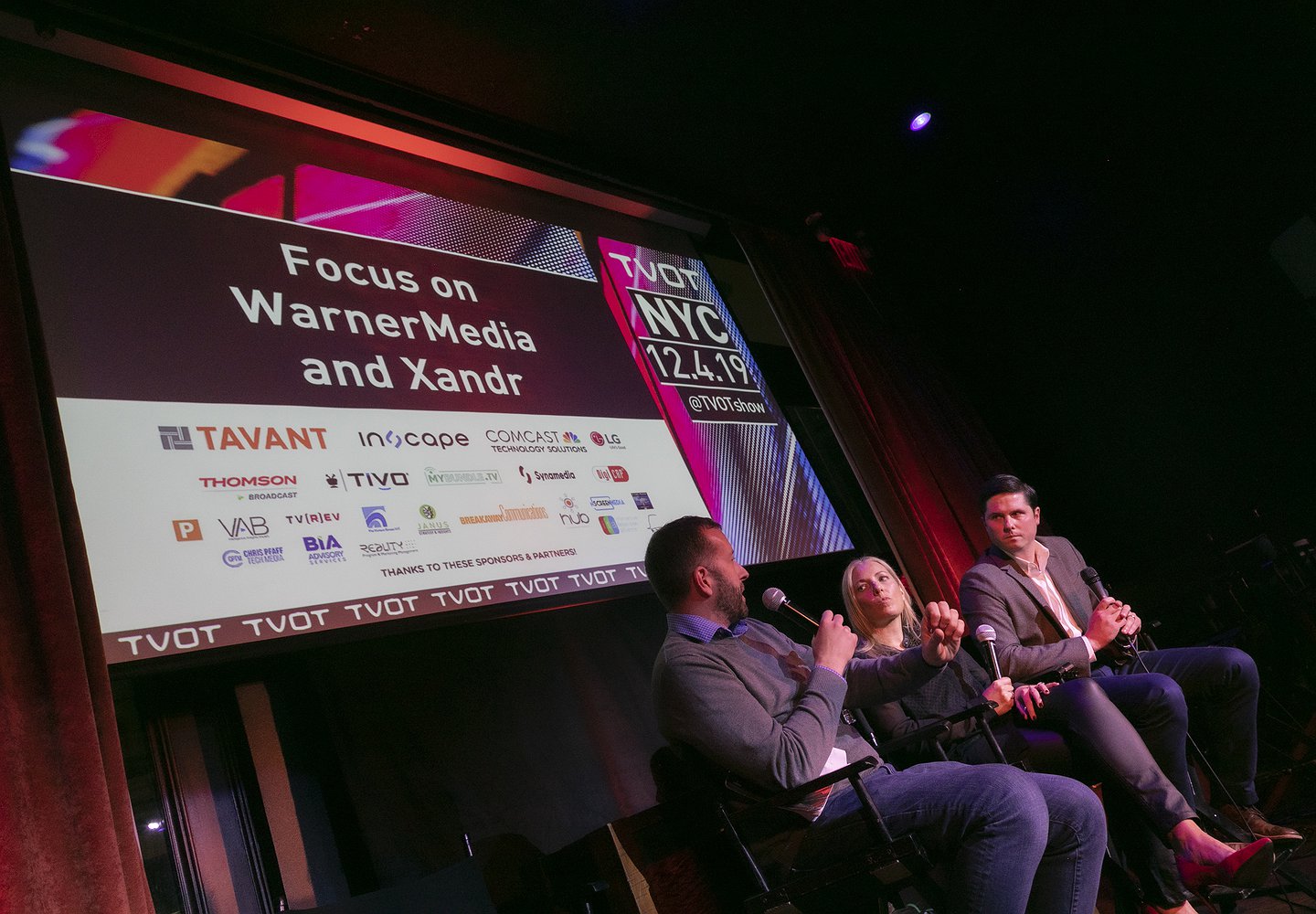
For some, according to consultant Mike Shields, when you think of sports advertising it’s generally, “big brands doing tent pole sponsorships. Sports doesn’t scream data technology and programmatic.” But for others, data-driven Moneyball for teams and athletes has made the jump to data-driven addressable advertising in sports programming. At the recent TV of Tomorrow conference, Shields sat down with Laurie Shackell, Vice President of Sports Advanced Advertising, WarnerMedia, and Brian Cordes, Vice President Head of Strategic Partnerships, Xandr to discuss the use of data in the sports programming arena.

Changes in the Sports Marketplace
Generally speaking, at least for marquee events, the sports advertising business hasn’t changed much in the past few years. Shackell offered that, “most of the clients we talk to in the sports landscape don’t want to give up national GRPs which are very precious,” especially for big events like the SuperBowl, All Star Game or NCAA Tournament. “And we are not suggesting changing that.” She also noted that overall consumption of sports programming has continued to grow across all of the different platforms. So within this rich and growing market, the recent merger of Time Warner with AT&T’s WarnerMedia and Xander, perfectly positioned to capture the full value of sports across platforms and all of the buying mechanisms for both national and local campaigns.  

New Forms of Advertising
Sports programming usage by fans is increasingly fragmenting, while becoming even more engaging, if that is possible. Shields noted that, “Bite sized consumption and social media are such a huge part of it [sports programming] now. I imagine that it is more complicated,” in creating media campaigns. But Shackell sees added opportunity rather than complication. “The Bleacher Report always says that the moment is born on TV but … now we can take those moments whether its online or even onsite at a fan fest,” and add the excitement and engagement of those moments to a measureable campaign.

One-to-one targeting is, “another distribution point,” explained Cordes, where Xandr is able to pinpoint a specific athlete’s fan and match messaging to purchasing behavior via addressable on TV or cross screen addressable programmatic. “So it’s by extending that distribution point across a more amplified sponsorship role,” he added.

Finding the Right Creative
“One of the questions we get in addressable TV all of the time is, ‘okay I get it, I want to use the targeting and I want the efficiency it brings but what content do I use?’ and 95% of what we see is people using traditional TV spots, the same spot they use in national linear and bringing it to addressable,” explained Cordes, to add frequency to those households most likely to convert. “But advertisers will always yearn for better and more relevant content and it was always so expensive to make another 30 second spot. So the idea is to take the content that is already being built and leverage these other distribution points, like addressable TV, along with what they are already purchasing from a sports perspective. It’s where we see a big potential for the future.”

Between the ability to leverage multiple platforms and adaptable creative for both national and local campaigns, today’s sports advertising marketplace is flexible, effective and growing. “We’ve also stumbled upon a new idea,” added Cordes, “around frequency management and impression distribution,” where it is possible to reach all potential populations for a brand via addressable from heavy to very light viewers of TV, overcoming some of the challenges of linear. That, and enabling direct-to-consumer advertisers to enter the TV space, indicates growth potential across all verticals and types of advertisers. 

This article first appeared in www.MediaVillage.com

Jul 1, 2019

Xandr - Preparing for a More Converged World


Image result for xandrOne of the major trends in television today is Programmatic. Once more of a digital and then a local TV buy, Programmatic is fast expanding into other television formats from OTT to VOD to even traditional. And media buyers and sellers are transitioning and adapting to this new, opportunistic normal. 

”Where advertising can benefit in the future is limitless,” noted Matt Van Houten, Vice President, Advertising Product Development Media Sales, Xandr who, along with Lindsey Van Kirk, Vice President of Product Management, spoke about their company’s initiatives at the recent Programmatic TV Summit held in New York.

An Expanded Business for a Changing World
While Xandr has been at the forefront of programmatic TV, they are not resting on their laurels according to Van Houten and Van Kirk. On the heels of recent media acquisitions, AT&T restructured its communications business, Van Houten explained, creating an entertainment division under WarnerMedia and an advertising division under Xandr as well as their global business.

The company has the capability to sell nationally, locally and programmatically and is making inroads into linear programmatic according to Van Houten. The long view is, according to Van Kirk, “to get into 100% of the buying selling workflow,” by “driving the target-ability of audiences whether they browse websites or are subscribers.” She sees that, “Consumers are becoming more fluid across platforms,” so the focus for the company has to include how to better analyze the audience to help advertisers extend reach. “We are moving more to a converged world,” she concluded. 

Convergence and Integration
To facilitate that convergence for sales purposes, Xandr relies on impression delivery which enables a seamless way to analyze audience delivery across platforms and through their AppNexus interface. In addition, Van Houten noted that there is the capability to, “have real time dynamic targeting by segment.” Future steps include, “a more dynamic integration into traffic system to make it less manual than it is today. We are looking to get to fully integrated systems.”

In addition to the technical and data aspects of the business, there is also the human and the creative element. “We are talking to more buyers,” stated Van Kirk, “They want more control with their relationships with suppliers and want access to greater insights and information.” To that end, she explained that, “We want to start expanding from a narrower programmatic lens to more unique formats for a more converged world.”

To accomplish this, the company is offering “a brand new user interface with a suite of products to expand creative formats and a powerful optimization engine with a new user interface that can activate on these different formats,” essentially taking any dollar and transacting on it programmatically. She is focused on, “How to bring people along on the journey,” and promised that, “Any way you want to work with us you can.”

The Future Looks Bright
“We are bullish on the industry,” stated Van Houten, especially with “5G is rolling out nationwide.” He explained that new opportunities crop up every day including, “driverless buying,” where passengers in driverless cars suddenly might have hours of free time as they travel and where, “data is coming off everything creating interesting opportunities for advertisers,” from smart dog collars that can indicate when to walk or feed the dog. “Sixteen (ad) minutes per hour has been under stress for a while,” he warned, so it is important for the industry to pose the question, “How can we interrupt less and monetize across other experiences.”

That is a long term approach. In the short term however, the big win a year from now would be “unified targeting and unified measurement across platforms,” for Van Houten and, “a buyer being able to access any piece of inventory they want,” for Van Kirk.


This article first appeared in www.MediaVillage.com