Showing posts with label out of home. Show all posts

Aug 31, 2022

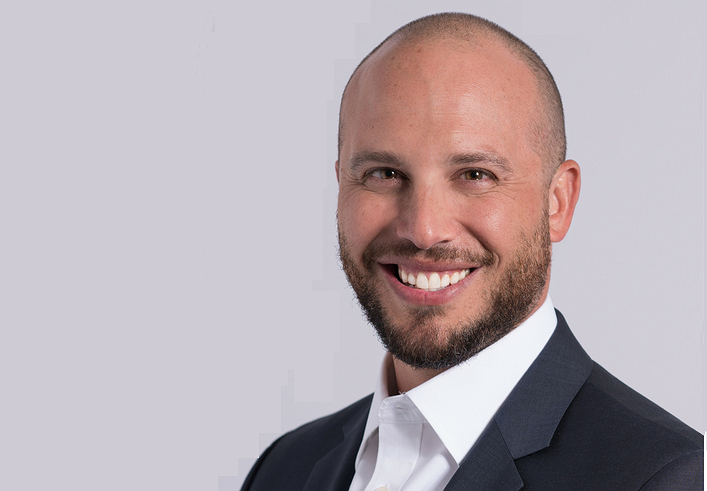
Intersection Purpose Driven Marketing Accelerates with CEO Chris Grosso

Intersection, an urban digital out-of-home advertising company, is embarking on a bold purpose-driven marketing initiative to make cities more environmentally friendly. According to Chief Executive Officer, Chris Grosso, Intersection, “is focused on three things as it pertains to sustainability. The first is the core piece of our business to support public transit. The second is to reduce our own footprint and the third is increasing brands and advertisers who want to align with sustainable products.”

To meet each goal, Intersection has been solidifying relationships across the board. For goal one, “We work with government agencies that help people do public mobility in cities,” he noted. Grosso estimates that Intersection prevented 1.2 billion pounds of CO2 emissions, according to the American Public Transit Association fact book. This was achieved by “getting people to take mass transit and micro mobility things like bike share and the like. We support those businesses by providing real time transit information, way finding, transit shelters, as well as generating revenue through advertising.”

In addition, according to Grosso, “We've provided more than a billion dollars in payments to municipalities over the last 10 years, most of which to support public mobility. So, by supporting public mobility and public transit that's a great way to drive sustainability and making cities more sustainable and help the environment.”

For goal two, reducing Intersection’s environmental footprint, “We put together a cross functional sustainability team to look at ways to reduce our carbon emissions and that includes things like reducing or transitioning our electric usage to clean sources as well as starting to test electric vehicles for our own vehicle fleets to support all of our infrastructure.”

With goal three, to increase brands and advertisers who want to align themselves with sustainable products, “We've identified a broad set of sustainable products for advertisers to sponsor. That can be things like electric and hybrid buses and clean electric power trains that our transit partners have in the streets, solar powered bus shelters that we deployed, bike share stations and even EV charging stations. Taking products that are clearly sustainable and environmentally friendly and giving advertisers and brands the opportunity to sponsor them and be associated with them,” he stated.

The main objective is to support public transit in cities, “which is a core piece of our mandate, getting our own house in order, by reducing our own environmental footprint and also helping brands align with sustainable products,” he stated.

With advertisers, Intersection seeks the right fit for each company and, as more companies and agencies are interested in sustainability, the time is right for action. Grosso explained that, “I was on the phone with one agency head yesterday who said that sustainability is a huge priority and they need these kinds of products in front of them. So it's actually being driven by the advertisers. We think it's the right thing to do, but the market is driving this and they're telling us that they want this.”

For Intersection, “This is a long term initiative for us. We're always going to be focused on public transit and I think you're going to increasingly see brands wanting to be associated with green and sustainable products. That's going to be a big growth area for us. With regards to our own footprint, over the next three to five years I'd like to see us mostly using EV vehicles, using mostly sustainable materials for our static business and mostly using green power,” he stated.

For Grosso personally, “I'd like to see us get to a much more sustainable place. It's an important long term initiative for us to get right because it's something that our employees are demanding, our city partners are demanding, our advertisers are demanding and honestly it's just the right thing to do.”

This article first appeared in www.MediaVillage.com

Artwork by Charlene Weisler


May 3, 2022

Intersection’s Total Measurement. Interview with Bella Nguyen, Director, Media Data Solutions.

Digital Out of Home (DOOH) is fast becoming a vital part of a media plan and Intersection is leading the way in measurement and innovation. Beth Nguyen, Intersection’s Director of Media Data Solutions, oversees all of her company’s media data measurement and attribution efforts from brand awareness to foot traffic to digital events to moving media to a new initiative that involves the pharma vertical.

Intersection, which positions itself as a publisher, offers a range of engaging content such as weather, time, factoids, art, notices of local events etc. But they also leverage all aspects of DOOH measurement that include both established currencies, such as from Geopath, and strategic partnerships that add a range of audience demographics such as the types of people who have seen the ads and what they do after exposure.

When it comes to metrics, Nguyen noted that, “We can measure attribution, one being website visitation. We've done a lot in the last year with different types of brands. We're able to pixel the brand's pages and see, based on the exposure, did they go to the website? Did they go to a booking confirmation page? It depends on the KPI.” She added that, “We're also able to measure foot traffic. We had a case study with a financial bank that's pretty well known in the city of Chicago and we were able to measure people who were exposed to the ad if they actually went to those bank locations.”

Intersection is also expanding into a range of other ad categories. “We're starting to measure script lift for the pharma category and we've also tapped into CPG sales live,” she explained, which are currently available on other advertising avenues but not in out of home … until now. Nguyen’s efforts enable the ability to, “measure if someone was exposed to a pharma campaign. Did they actually go to a health care provider who prescribed that specific drug? If not that drug, did it still drive visitation to a health care provider? We're super excited to tap into that.”

Historically, out of home was only able to measure static media. “Anything that was a fixed location,” she noted, “but digital out of home has evolved. With moving media, we're able to actually track the GPS data from vehicles which are publicly available by the transit authorities. Our bus measurement vendor street metrics has device ids so they're able to create view sheds and actually see if there was a device ID that was exposed to that bus at that given time. I worked for major news networks and music streaming companies. They had all of this. But now we're doing this for out of home.”

She noted that, “When people think about large formats, they associate it with billboards, which are impactful and have large formats. Moving media, particularly bus, also has large formats and what's really special about that is that it's moving through our cities which expand reach.” She has calculated that moving media on buses travels, “23 million miles driven in our cities. When you think about that number, it is super impactful for reach. We also observed over a billion impressions just in our major DMAs and markets over a full year. That is a really strong outcome.”

The data Intersection culls from all of their platforms offers a variety of uses. Nguyen explained that, “From a baseline, we can measure impressions, miles driven, frequency, the amount of time someone is exposed to the ad. We also have demographic data based on household census blocks and then to layer on top of it is someone is looking to really measure the effectiveness and has a certain KPI we're also able to measure web visitation and behaviors and foot traffic,” through geo location.

An intriguing case study involved a teeth aligners brand. “Their KPI was to drive visitation. They wanted to see if people went to their website and then actually end up going to a booking page for an appointment or to purchase the aligners. Their secondary KPI was on digital platforms to test their creative. We were actually able to do that for our bus creative, so we had four and at the end of the campaign we broke it out into overall results. How many people actually went to their page and then we broke it up by creative ABC and D and actually saw which creative was the most effective. The client ended up swapping out their creative mid campaign taking our recommendations and included a bigger and larger call to action to go on the website. The results back from the second study was just as effective, if not more.”

For Nguyen DOOH, “is going to be inclusive of everything. We're going to get to a point where people are going to be able to measure their entire out of home media plan and tack in digital TV, radio and be part of that holistic effectiveness. This is not just going to be for people like me or data analysts. It's going to be for sales folks, it's going to be for client success teams, it could be for the creative teams.  It's definitely going to be a tool, where it's going to be beyond just measurement and attribution.”

This article first appeared in www.MediaVillage.com

Artwork by Charlene Weisler


Mar 11, 2022

The Value and Impact of Moving Media

The death of cities predicted during Covid has been greatly exaggerated. People are returning to urban centers in droves that not only revitalize city life but also create great opportunities for advertisers and consumers. 

For Michael Rosen, Chief Revenue Officer, Intersection, cities today reflect a, “revitalization and vibrancy. We have so many people out and about that it is an indication of the strength of cities.” This offers advertisers a unique opportunity. “Marketers are really struggling to reach audiences whether it's at scale or underserved audiences and I think the behaviors of consumers and cities have really helped,” he noted.

City Fluidity

According to Rosen, the urban landscape is more complex than one might think. “Only 8% of Americans moved from one U.S. home to another between March 2020 and March 2021 and that was based on the census bureau’s current population survey,” he said and added, “Certainly, there were some movement, but you have people who are either staying or moving back and then you have this hybrid work environment that has brought such amazing opportunities to both city centers and neighborhoods.” These consumers are seeking convenience in their goods and services which begs the question - “How do you extend those experiences when they get back into the office?”

How Moving Media Works

In order to better reach these consumers, Intersection offers advertisers the ability to connect via out of home in a variety of ways. Rosen’s company is focused on “street transit, airports and street level advertising in the major US cities. One of our transit assets is moving media which consists of location based display advertising on things like buses or subways,” he explained.

Take bus transit, for example. “A bus campaign that starts in a neighborhood that has a certain audience, a certain number of impressions, a certain demographic and then depending on the bus route, depending on the city, that moving media can move from location to location,” he noted. This is proving to be even more effective than placed-based static media where a consumer must walk by it to be exposed to the messaging. In short, moving media, “hits people in different points in their daily journey, offering amazing impact,” for advertisers.

Measuring Moving Media

Measurement for moving media involves a variety of data sources. “Intersection uses data to help advertisers understand the behaviors that are happening as a result of their advertising and the outcomes that that we are trying to solve for, such as attribution,” Rosen stated. Data and other information is culled from the routes the moving media takes such as, “How many miles driven, which parts of the city, where was the most campaign traffic. Then, connecting to real time bus location data device-level behavioral insights to really understand the aggregated demographic information and secondary behaviors that are helping marketers not only prove out the efficacy of the actual campaign, but to find other ways to invest in those neighborhoods or cities,” he outlined.

With attribution, for example, Intersection uses foot traffic. According to Rosen, “We can say that a moving media bus campaign drove X number of incremental visits to this big box retailer or this this pharmacy chain, or this major event. We could also say that this bus campaign drove a major number of new App downloads for a digital campaign, or it drove to a shopping cart for ecommerce.”

At a time when ad avoidance has become an art, Rosen believes that moving media better captures consumer attention and involvement. “Marketing Science put out a study that said 30% of TV ad plays are being played to empty rooms,” he shared. “When you think about walking down the street and seeing 10 people, those are real people and not an empty room. The benefit to out of home is that there's an audience that marketers can activate now.”

Looking Forward

Between the resurgence of cities and a new-normal consumer behavior, the future for moving media will only get rosier. “The out of home industry has proven that we are in the real world, we have real people, they're going about their day, they are working, they're going to school, they’re shopping, they are aggregating, they are interacting in a way that makes them appreciate the marketing messages that they see every single day,” Rosen stated.

“I think what's wonderful about what Intersection and the overall out of home community has done over the past several years is bringing the best of digital to the moving media universe. It’s opening up opportunities that marketers have only dreamed of because it's the here and now,” he concluded.

This article first appeared in www.MediaVillage.com

 Artwork by Charlene Weisler

May 24, 2019

Tying Attribution to OOH Sampling. An Interview with Marci Weisler of Vengo Labs


Image result for marci weislerMarci Weisler (no relation, though we tried to figure it out), Chief Commercial Officer, Vengo Labs, works for a uniquely situated company in the out of home space. Billed a, “retail and marketing tech company that is reimagining how brands connect with consumers,” Marci noted that this technology “bridges the gap between digital and real world experiences by combining retail with DOOH media and product sampling.”

Vengo is actually a network of over 1200 mini interactive digital vending machines at gyms, hotels, colleges and corporate locations in major DMAs. Future plans include expanding into retail stores. The company offers a consumer the ability to sample products from personal tech (headphones and chargers) to beauty and wellness, to CPG and non-perishable food. 

According to Marci, the data they collect is opt-in via consumer interactions with surveys and quizzes, also collecting emails and/or phone numbers on a campaign by campaign basis. The “cloud based Vengo Information Portal (VIP) tracks retail (product inventory, sales), all media (impressions delivered, screen interactions) and sampling campaigns (samples vended, opt-ins),” she explained. The campaign level data is shared with Vengo’s clients on a campaign by campaign basis.   “On the sampling side, Vengo is closing the loop enabling brands to understand ROI and retarget consumers in ways they have not been able to use in the past, and giving them the opportunity to connect with consumers post-sample and drive to purchase/conversion,” she stated.

While Marci believes that Vengo is unique in the combination of retail, DOOH media and trackable product sampling, their competitive set varies by product category. In fact, Vengo sees them as potential partners such as in the following categories:

Ø  Sampling--in-store reps handing out samples, sampling companies like Birchbox, sampling-only kiosks.
Ø  DOOH Media--other networks and media.
Ø  Retail/vending--Zoom Systems, micro-markets

The retail ecosystem changing, she noted, with consumers spending less time in brick and mortar stores and making purchasing decisions everywhere.  “Vengo meets consumers at contextually relevant times in their day, aligning product availability with the time they need them most.  For example, in the gym locker room they can purchase headphones or trial a new beauty product, while seeing an ad for a new wellness supplement. We are also working with retailers to enhance the in-store experience and drive engagement at the point of sale,” she added.

Vengo is also going cross platform with connections to mobile devices through geo-fencing as well as marketing initiatives such as mobile coupon codes redeemable at Vengo, or sampling opportunities that require taking a quiz and giving your email address to get a free sample which can then result in another coupon code to use for next retail purchase of the product.

But there are challenges. She explained that with a big hardware component, there are challenges expanding the network (as opposed to building traffic to a web site or mobile app), “but now that our network has surpassed over 1200, we are ramping quickly.  We also have a size constraint since our machines are compact and take only two square feet of wall space, but our ex-aerospace engineering team has maximized the ability to put a high quantity of product into a small space.”

Advantages include the ability to engage consumers digitally--whether through sampling or interactive DOOH media, collect actionable marketing data to convert “trailers” to buyers and drive product trial and calculate ROI on sampling programs. “For retailers we provide retail tech solutions that make shopping in-store fun and compelling--and provide metrics-based sampling programs that drive in-store purchase,” Marci stated.

And what she terms as, “critically interesting” is Vengo’s ability to “tie attribution to sampling which never existed before. For that reason we got a major investment from Arcade Beauty,, the world's leading manufacturer of beauty samples and are working to reimagine the space for brands and for retailers. We've got some exciting campaign results,” to be released in the possible future.

This article first appeared in www.Mediapost.com

May 25, 2018

The Royal Wedding – Viewed Everywhere


According to Paul Lindstrom, Head of Research and Analytics, Tunity, it seems that no matter where you were on May 19, 2018 at 6am, you could be watching the Royal Wedding. 

Data from the Tunity app, which captures opt-in out of home audio, revealed that people made a special effort to view the wedding even if they were not home at the time.

Charlene Weisler: What data do you have that represents out of home viewing for the Royal Wedding?

Paul Lindstrom: I was interested in seeing the Royal Wedding impacted overall OOH usage in locations like gyms, restaurants, offices etc and saw that total OOH usage as measured by Tunity for May 19th from 6A to 9A indexed at 249 versus the usage for the same period from the previous week indicating a special effort to view. I next looked at viewing to individual networks carrying the event. While the overall usage gain was impressive, the individual networks were even more so. CBS indexed at 867, NBC at 721, ABC at 680, and CNN at 303. PBS and BBC America were not included in this measurement. In total the Royal Wedding had 86% of the total OOH audience 6A-9A. Audience for all of the networks peaked at approximately 7:45 AM.

Weisler: How was this data collected and parsed?

Lindstrom: The data was collected using data from Tunity’s app which allows users to scan a linear channel appearing on a video screen in an OOH location and subsequently stream the audio signal. The video scanning allows us to see tuning to sets that are muted and those in areas with ambient noise (which is most crowded locations). This cannot be done using audio techniques which count viewing to these channels as if it did not exist (which with audio it does not). The data is collected and reported as minute by minute tuning data. Minutes are averaged to provide average daypart and program audiences.

Weisler: What conclusions are you getting from this data?

Lindstrom: I have concluded that OOH should be looked at as separate from and not merely an extension of the in-home audience.  In an in-home environment, whether in your own home or a guest in someone else’s, there may be hundreds of channels available covering the full scope of channels in distribution, any of which can viewed.  In an OOH environment, the channels that are available to be viewed are limited and curated by the venue. The channels that get coverage within the venues will get much larger shares than they would have in-home.

In some ways the viewing environment is similar to in-home from when I first started with Nielsen. There was limited channel selection (three networks maybe an independent and PBS) and cable was perhaps 25%. The three network share in prime time was 90. No one would think to look at in-home viewing today and use it to predict what in-home viewing was like when I began. In the same way no one should look at in-home usage today and try and figure out what is going on OOH.  It is not surprising that big events like the Royal Wedding could pull such big shares. We see that it is not uncommon at all for major sporting events such as the NBA Playoffs to garner greater than 50% of the OOH viewing for the time they are on. I think that there is a need for a new paradigm for usage in OOH locations.

This all also becomes more complicated because In-home, we are able to physically change channels and this is currently measured in a variety of existing ways. In a multi-screen OOH environment, however, we change channels by moving our heads and shifting our focus and attention. Any measurement of OOH video usage needs to be able to differentiate between what you can hear and what you choose to watch. Attention needs to be a part of any OOH metric.

Lastly, more than half of the OOH viewing that occurs is with muted TV.  Often in a location, there are multiple TVs showing different channels and, at most, one of these will have sound. Based on that assumption, if there are three or more channels available, 65% or more will be muted. If viewing is picked up using audio methods then 65% of the time it would be to the wrong source or difficulties picking up the signal where there is significant ambient noise. It is not surprising when more than half of the tuning is missed with current audio methods. OOH viewing of linear channels is currently unreported or severely under-reported. Many researchers feel if something is not measured it does not exist.

Weisler: How did the royal wedding performance out of home compare to other programs you have monitored like sports? What programs in the same time period?

Lindstrom: Events like the Royal Wedding are special occasions. They not only draw substantial interest but they are available on multiple channels.  It is unlikely that there would have been very many locations that were open that would not have been showing at least one of the channels. Coverage would be key. There are also not too many major events on at those hours. As Tunity continues to generate information I expect that we will have more to compare. As a rough point of comparison the Wedding did approximately the same size audience as the NBA Semi-Final Playoff games and did it at 6-9 in the morning which is time when a sizable portion of the potential sets were in locations that had not yet opened. It was impressive to me.

This article first appeared in www.Mediapost.com


OTT DR, While New, is Part of the Full TV Ecosystem. Interview with Dish’s Scott Berger


Just like the television marketplace in general, DR advertising is evolving at a rapid pace. Scott Berger, General Manager, Direct Response and Paid Programming at DISH Media Sales, see DR, whether via linear or OTT, all part of the ecosystem.  “Whether it’s delivered by a satellite or over the internet, it is TV,” he explained, “We approach OTT in the same way we do traditional television. Jumping into OTT is like partnering with an MVPD—you can buy a broader rotation if needed or layer on targeting through an audience-based buy.”

I have to admit that OTT DR is a new concept for me and so I reached out to Scott for more information:

Charlene Weisler: How new is OTT DR in the marketplace and how is it pacing?

Scott Berger: Buying live and on-demand content over-the-top is still relatively new. Since dynamic ad insertion was enabled at the end of 2015, we have seen the number of advertisers grow rapidly as more inventory becomes available. Viewers are moving over to OTT and advertisers follow eyeballs. I expect that advertising on OTT will eventually become mainstream as traditional Pay-TV declines.

Charlene Weisler: Please talk about the attribution chain in OTT DR. How does it work and what does it provide an advertiser?

Scott Berger: OTT provides extensive post-campaign measurement that allows advertisers to track reach and frequency, Impressions, Network and device performance, video completion rates as well as access custom measurement opportunities. Brands that take advantage of addressable opportunities across OTT benefit from longer attribution windows and access to more robust ROI reporting. Consumer behavior is changing – people are picking up the phone to purchase less and less. When is the last time you saw a 1-800 number and picked up the phone? With addressable, we have factored in longer purchasing processes with attribution windows from 30 – 90 days that take into account in-store purchases, website traffic, etc.

Charlene Weisler: What data can you collect and merge?

Scott Berger: To enhance the intelligence within our DISH and Sling TV subscriber data sets, we have partnered with the industry’s major data providers, from the more general analytics companies, like Experian and Acxiom to specialized data vendors, such as Polk and NCS.  Our targeting capabilities include, household demographics, 3rd Party Data, such as Purchase Behavior, Lifestyle Behavior, or conquests, as well as first party data including Customer List Matches, Promotional Sign-ups, Direct Mail Lists, or Loyalty Programs. Specific to the programmer category, we’ve developed in-house tune-in models to drive viewers to a program using anonymized viewership data and 3rd party segments.

Charlene Weisler: How do you guarantee privacy for consumers?

Scott Berger: Personally Identifiable Information is not released to advertisers. We use industry-standard encryption and technologies to keep personally identifiable information anonymous.

Charlene Weisler: What is the value proposition for OTT DR and does it vary from linear DR, from programmatic, and from data driven advertising? 

Scott Berger: DR advertisers can no longer rely solely on traditional TV to drive action among their consumer base. Due to the increasing numbers of cord-cutters, linear TV buys are reaching fewer viewers and ads are not seeing the responses they once did. OTT services, like Sling TV, that offer live and on-demand programming give marketers the ability to serve ads to these hard-to-reach viewers and close the cord-cutting gap. They also combat common digital pain points like ad fraud, blockers and low completion rates by delivering a true television experience to the consumer – just without the cord.

On OTT, ads are served via dynamic ad insertion (DAI) and only air when the viewer’s device is on. With traditional non-targeted linear advertising, brands can only hope that their target demo is watching a specific channel at a certain time. With OTT, DAI finds the viewer and delivers the ad only when they’re watching content—therefore increasing the value of impressions served.

Charlene Weisler: How is the latest technology helping OTT DR? (Like the use of pixels)

Scott Berger: New attribution data such as pixels and mobile location data have allowed DR advertisers to more effectively close the loop on addressable campaigns. A brand can now send a 1:1 message to a Sling subscriber and determine whether they went online to purchase or walked into a store. 

Charlene Weisler: Where do you see DR in general in the next three years and how large role will OTT be in that?

Scott Berger: It’s audience-based buying across live premium content. DR advertisers focus on who their audience is and find that audience regardless of where they are in the live stream. Over the past three years, we have been in the live OTT marketplace essentially alone. In the past year or so, we have seen more players enter as live sports and live news drive viewership.

This article first appeared in www.MediaVillage.com