Showing posts with label voice search. Show all posts

Sep 19, 2019

Facilitating the Conversation Between AI and Voice with Kantar and Pulse Labs


The recent announcement of a Kantar partnership with Pulse Labs has the potential to change the “conversation” regarding AI and voice as well as to address the growing number of questions about the space. I sat down with Nick Nyhan, Chief Digital Officer, Kantar, and Abhishek Suthan, CEO, Pulse Labs to get further insight.

Charlene Weisler: Can you please give a quick overview of the partnership? 

Nick Nyhan: Voice is not new but voice as an automated platform is fairly nascent. As voice emerges as the new big platform, being made available by many big platform companies, there are some big decisions to make and questions to answer, such as: how will consumers take to it and for what reasons?  Where should marketers and brands extend themselves but not go too far?  How will the platform find its sweet spot in people’s busy lives and where might it replace something else or add to it?  Where are the use cases that will be suitable for large adoption among early, middle and late adopters?  How will this platform compare to other digital media platforms?  How can the platform companies use the language and meet the needs of different consumer groups, and find those sweet spots between consumer convenience, commercial-models and ensure consumer-controlled listening?  Kantar has been answering these questions for many years, and with Pulse Labs, we can combine expertise areas to answer these bigger questions for clients.

Abhishek Suthan:  Our partnership with Kantar was born from the recognition that the data and understanding we have from the voice platforms, while valuable on its own, could be greatly enhanced when combined with broader market insights. Much like any brand's voice strategy is best understood and executed as an integral part of a larger market strategy, consumer voice behavior is best understood and analyzed as an integral part of a broader consumer picture. 

Weisler: Can you share some usage figures on voice assistants today and where you project it in the next 2-3 years? 

Suthan: To start, there are about 75 million smart speaker owners in the US, and almost 150 million globally, and those numbers are only going to keep rising. Right now about 25% of digital radio listening happens on smart speakers, and that more than doubled in 2018. But the really big story over the next two to three years won't be the continued rapid growth of metrics like these, but the spread of voice assistants from smart speakers into many other devices - particularly within the car. Just yesterday, McDonalds announced the acquisition of a voice technology company and the creation of a research lab to bring voice tech to its drive-thrus. It doesn't require much stretching of the imagination to see a world where we'll be able to place orders via voice directly in our cars while we drive to our favorite restaurants. And that's just one of many applications on the horizon.

Weisler: How are you linking to Kantar?

Suthan: We're still working out all the possible ways we can find synergies for our respective data sets. However, we've been able to effectively combine data from Kantar's consumer survey panel with voice behavioral data from Pulse Labs.

Weisler: What types of datapoints and metrics will you offer?

Nyhan: We will bring attitudinal and behavioral data in various combinations that make sense to the client question at hand.  Some may require actual interaction data between consumers and the platform (Hey Google, Alexa), whereas some may require a larger study of consumers attitudes via survey or field observation.  We want to be able to bring the right data from real consumers. 

Weisler: Do you have some preliminary takeaways and if so what are they?

Nyhan: We see adoption entering a second phase, past early adopters and into a second group: people who were given the smart speaker as a gift, or only use it play music.  As the audience grows,  use cases will need to be refined and experiences will vary as experimentation explodes and everyone learns. 

Suthan: It's remarkable how much people are using their voice assistants to create quick reminders, like shopping lists. One thing that's notoriously difficult in audio advertising is tracking how well consumers remember ads, and what actions they inspire. Well, today, if you're listening to an advertisement on the radio that sparks your interest, and you're listening on a smart speaker, you're able to immediately take action on it by, for example, adding an item to your shopping cart. The problem is, brands haven't had a way to track things like that. Well, now we can help with that, and this is just one example. 

Weisler: How are you insuring privacy? 

Nyhan: Voice is a great area but some are fearful there is listening going on that they didn’t approve. At Kantar, we want to do all our insights work – not just in Voice - with compliant permission-based data, that is our plan here too.  As such we approach this to fit within all the rules of GDPR and CCPA. 

Weisler: What are your initial deliverables and what future deliverables are you building? 

Suthan: Right now we're working with select partners on customer research, while building overview metrics and dashboards for general consumer behavior on voice devices. The future deliverables will be determined by what our customers are interested in and want to know.

Weisler: How can advertisers and creators use the results? 

Nyhan: Marketers can use the results to drive their Voice strategy, see what consumers like and don’t like in the category, how their brand would fit in, how the experience is from a consumer POV, and where they can lead or play fast follower. Just like copy or concept testing, Kantar and Pulse Labs can help content creators pre-test their ideas in a smaller way before it goes to wider release and see if it is meeting everyone’s expectations of a good experience.    

This article first appeared in www.Mediapost.com

Jul 11, 2019

Nielsen’s Latest Total Audience Report Reveals a Surprising and Challenging Future

Nielsen’s Latest Total Audience Report Reveals a Surprising and Challenging FutureIf one could ascribe a word to describe the findings from the latest Nielsen Total Audience Report, it would be “surprising.”  The report not only reaffirmed some of the basic trends in consumer media usage, it also revealed some new usage behaviors from content choice to demographic stratifications to hardware and software adoption.
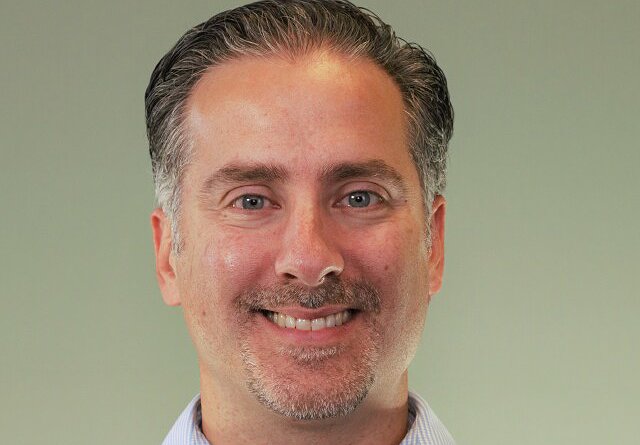
Peter Katsingris (pictured at top), Senior Vice President, Nielsen Audience Insights, described the current media environment as one that “changes quickly. There is always something new that pops out, especially when we include other Nielsen data sets that have not been included in this report before.”  One example of this was the addition of moviegoer data that tended to skew younger.
Media companies cannot afford to be complacent in this ecosystem. Consumers’ appetites for media are continuously evolving, according to Katsingris, who reported that consumers spend over 11.5 hours a day on media. “That’s almost half a day,” he said. “Clearly, most of their awake time is connected one way or another.”

Video discovery was an “ah-ha” moment, based on new data. “We definitely found this data surprising with respect to the consumer journey,” Katsingris noted. The report revealed the decision-making process viewers undertake when choosing content. “We asked questions, like ‘Do you know what you are going to watch before you actually watch’ and ‘What action did you take to decide what to watch?’” he said, adding that almost two-thirds of adults know exactly what they want to watch most of the time, while one-third have a general idea and about a quarter weren’t sure.  Ultimately, he said that 58% indicated they would view their favorite traditional channels if they couldn’t make a decision.

The amount of time we spend searching was also interesting to Katsingris. Viewers spend time scanning options, “and we realized that eight minutes of time went by before they made a decision. That is eight minutes of browsing through menus to see if something catches your interest.” He suggested that content owners need to [stand out in] these early stages of consideration and cut through this clutter “to make sure that what they are offering stands out from everything else.” One way to do this is to make sure that their content is available across all services, platforms and devices.
For those who didn’t really know what they wanted to watch, their content search revealed that “what ranked the highest was search that could be done via the remote to quickly look through your favorite channels.  People tend to rely on what is familiar to them to get them through this time of choice.” The search activities that stood out “were those tuned to favorite channels, scanning through the traditional TV channels, going through the program guide, then browser menus on subscription services,” he revealed. These choice orders varied somewhat by age, with younger viewers searching subscription services more than overall adults.

Interestingly, the report indicated that “recommendations from service providers were less likely to influence viewers on what to watch.” Further, 21% opted out of viewing altogether when they couldn’t find anything to watch.

Voice Assistants and Smart Speakers
Technology is not only driving video search partners; it’s also impacting how users engage with voice assistant technology. Voice assistants are used by 36% of all adults. “It’s found everywhere from your smart speakers to your smartphones,” Katsingris noted. “Even my cable remote has voice assistance as well to help me find content. It’s an enabler to allow consumers to get answers quickly and access content, and also, with IoT, control things like lights in the home and your car, hands-free.”
Since smart speakers launched a few years ago, their adoption and the amplification of audio content has continued to rise. Smart speakers are now found in 28% of all households, and because of their hands-free convenience, Katsingris believes that they are replacing other functions that devices had. “As consumers acquire these devices, their capabilities will continue to grow, and ownership will expand exponentially with their use,” he said. Most usage is music and weather, “but, according to our MediaTech Trender Survey data, we see that nearly all smart speaker owners, about 95%, report listening to music on their devices,” he continued. “It’s potentially taking away users who listen to music on their smartphones, TV sets or on tablets.” The top listening formats for smart speakers were music, podcasts, sports updates and shopping online. And, he noted, some people just like to chat with these devices. “Seventy-seven percent report that they just like to talk to them for fun.”

The Future
For Katsingris, the future for media companies is at once challenging and opportunistic. “Consumers continue to engage with media across all of the platforms,” he explained. “It’s at their leisure. It’s on demand for a good part of the day with some demographics more than others. So, it’s really important to know who is using which platform and how much more than others to reach your desired demographic. I just hope younger generations know the old way of doing things as well and aren’t depending on things being done for them.”

This article first appeared in www.MediaVillage.com

Mar 25, 2018

Simulmedia's Dave Morgan on Predicting the Future of Media

Does the past presage the future?  Generally speaking, one might say yes.  But some media executives see a future with little to no precedent.  Dave Morgan, CEO of Simulmedia, believes that the industry is undergoing such dramatic structural change that it is difficult to parse the future impact based solely on previous disruptions.  I recently talked with him about the complete disappearance of some forms of media, the impact of voice search and the future of TV measurement.

Charlene Weisler:  What is going on now in the media ecosystem?

Dave Morgan:  Most people, when they look at changing trends and forecasts in the media industry, look at what has changed in the most recent past.  They look at the trend lines in the longer-term past to see how fast they impact things and then they project that forward.  What I think is happening now that will make that approach difficult is that we are seeing really big structural changes in how people are consuming media, how advertising is being bought and sold and how marketers are going to deploy the money for the acquisition of customers.  It is going to be very unpredictable for a lot of people.  The truisms we have heard for decades that no subsequent new media destroys the old media will go away.  Yes, we will see less classic radio and more digital audio.  We will see less newspapers and more digital news.  But we will see what we always thought were long-term sustainable advertising channels truly disappear because of their inability to be economically supported.

Weisler:  So in your experience, has there been any other point in time where you have seen such dramatic transformation in the industry?

Morgan:  No.  I think that the big macro issues have been seen for a long time.  Certainly if you go back 30 years, Jack Myers was predicting these things and he was probably one of the only people who was doing so.  The tension between above the line and below the line in spend, what happens when marketers take greater control … the only thing that I think is close is what we saw with search and online classifieds.  I will use Craigslist as an example; what search did to the Yellow Pages and the classified business, that is probably comparable.

Weisler:  The result of that has been a disintermediation of that business.

Morgan:  The newspaper pillars have been taken out.  The Yellow Pages businesses are a fraction of what they used to be -- not even 5% I expect. So the vertical commerce classified businesses that have survived are interesting and pretty powerful but they are not nearly the profit drivers that we used to have in print classifieds.  But the good thing is, without question, the consumer, the user, the potential buyer, the seeker of commercial information has a dramatically more robust experience, simpler and faster than ever before.  So, the people who had to wait for the classified ads to show up, to see what car they could buy, or the person trying to dig through the Yellow Pages to try to find a restaurant to go to from books that were published 18 months before, they won.

Weisler:  Concerning the future of search, I have been hearing a lot about voice search.

Morgan:  I'm a believer in voice search.  I think the user experience of typing text either on a PC or a phone is not nearly as easy and simple and intuitive as talking.  So I do believe that voice search and voice commercial search would be pretty powerful.  This obviously tells you there is a chance to have a significant shift in the search business over time; away from Google, which is so dominant today, to something towards a company like Amazon which is a leading contender at the moment.

Weisler:  Television is still working with proxy measurements when everything is about targetability.  The rate of change appears to be lagging.  Do you see that to be true? 

Morgan:  This is probably the area that will be the most suddenly hit when it hits.  For a number of reasons, TV advertising has been much more resilient than a lot of people expected because it works.  As inefficiently bought, sold and measured as it is today, nothing beats TV in doing what TV does well.  Nothing reaches more people faster.  Nothing delivers more per-person delivery impact.  Nothing is fundamentally cheaper.

National cable CPMs per 30 second spots were $7 to $9 while premium digital, a six second pre-roll CPM is $40 to $50.  This is because most of the buyers in the digital world have come from direct response so they value things as what they are worth to them.  Because the prices are low on TV, there are more buyers than sellers.  So, if you have a line-up of buyers who are willing to purchase your inventory based on what you valuated it on a business model, you don't have to change things a whole lot.

But just like the Hemingway quote from the Sun Also Rises when Mike was asked how he went bankrupt and he replies, "Two ways, gradually then suddenly," I think that is the change coming to the TV industry.  Which is why every TV company is for sale today.

This article first appeared in www.MediaVillage.com