Showing posts with label Mike Bologna. Show all posts

Oct 5, 2018

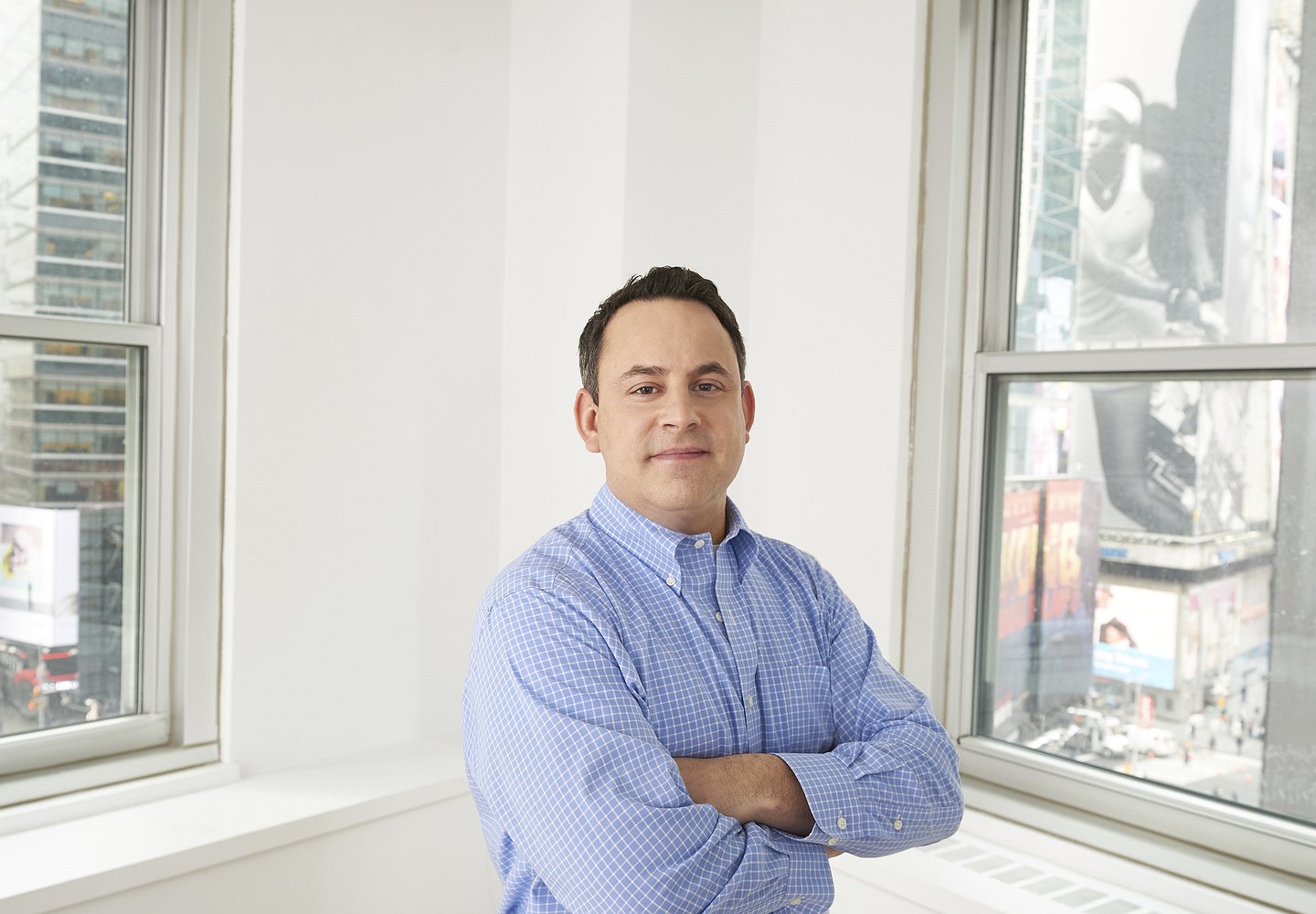
Mike Bologna Predicts the Future of Addressable Television


As the structure of the TV buy and sell paradigm evolves with advancements in automation, technology and protocols, the future of television is filled with a range of dramatic possibilities. Mike Bologna, President one2one Addressable, Cadent, presented his views of what he sees as the future of Addressable TV at the recent TVB conference held in New York. 

Bologna spoke with Videa President Shereta Williams about what’s next in targeted TV and automation for broadcasters. The discussion focused on the automation of the business model to, as he explained, “enable new business models; what broadcasters are doing to advance standard API adoption through the TIP initiative; what is the local broadcast Addressable Advertising opportunity now and in the future; and how will connected TVs and ATSC 3.0 adoption enable Addressable Advertising.” The TIP initiative is a partnership between system providers in order to streamline transaction workflows and create greater inter-activity between various buy and sell systems. 

The Pressure is On
For Bologna, TV once involved the entire family sitting around a wooden TV box viewing content together. But that was a long time ago. “TV was easier to plan, buy and measure,” he reminisced, “But that is not the case anymore. Now no one is at home watching TV. We are now in a world where consumers have all the choices in the world.”

All players in the ecosystem have their challenges. Overall, the industry needs to be nimble and forward-moving. There is a natural tendency to strive for the perfect solution but that can hamper progress but hesitation is lethal. “TV is changing,” he stated, “and we can't wait until its ‘perfect’ to adopt addressable.” He also pointed out that data and technology are the center of the TV business and the industry is poised for great change.

Brands are under a lot of pressure to “get the most bang for their buck,” while, “Media owners need the highest rent they can get so they can continue to produce great content. It is a complex marketplace,” he noted. And agencies, according to Bologna, have the hardest job of all. “Agencies have the burden of putting all of it together holistically and not in silos.”

Actionable Steps
Broadcasters face their own unique challenges in implementing addressable (including carriage agreements, unified measurement system). Marketers are limited with two minutes per hour. And between the two entities, there are a myriad of legacy buy/sell systems that have “a lot of pieces to be stitched together across twelve different systems. There is no way we can scale without solving that problem. That is where the TIP initiative comes it.” The opportunities are there for these two sides of the buy/sell to facilitate the targeting of messages to reach the right consumers at the right time.

“Define a segment and send a message to that particular home,” he stated. “Addressability should deliver audience at scale. Not 120 million households but whatever the percent of the U.S. your target audience is. And it should tie back to a sale or whatever you are trying to achieve.”

The messaging “has to be efficient as calculated by price divided by return in investment,” he noted and added, “It has to be transparent in terms of scale and it has to drive results you want. (Addressable) is the only area of TV where you start with a segment, match it, feed it in and tie it back to a sale.”

New Technology
Broadcasters need to take full advantage of the emerging technology of smart TVs. “If your TV is connected to the internet you can receive an addressable ad. This is the broadcaster's marketplace to win and conquer,” he said. “Today, implementation of addressable advertising faces challenges of scale. With an alliance between the TVB and several Smart TV OEM’s, this is a great proof of concept and interim solution until ATSC 3.0 is in play,” he advised. 

But he is also realistic about the timeline for ATSC 3.0. “Speaking specifically about broadcast, ATSC 3.0 will solve this for us tomorrow if it was mandatory, which it is not. Because it isn't mandatory and it costs money it will be a slow roll out.” Despite this, he is bullish on the ATSC 3.0 Protocol Stack as a future game-changer. “It will speed up adoption of addressable TV, though it could be a while until this protocol is widely adopted,” he hedged.

This article first appeared in www.MediaVillage.com


.

Apr 5, 2018

TV Legacy Systems Holding Back Advanced Advertising Efforts?

Legacy data may provide a standardized measurement platform, but “data is advancing more quickly than our ability to transact on it,” Mike Rosen, NBCU’s evp, advanced advertising and platform sales, told attendees at NewBay Media’s Advanced Advertising conference in NYC Mon. “In TV, there are so many legacy principles that have been around for decades. Data is happening so quickly that the industry has trouble figuring out how it fits.”

One2one Media pres Mike Bologna, argued that “if advertising has to be advanced, then the data has to be better than the past. We need different forms of data to best calculate.” TV’s legacy infrastructure, however, can impede advanced advertising growth.
“We are dealing with a lot of legacy systems, and they are not going anywhere,” said Doug Hurd, co-founder, evp business development, clypd. “We are trying to reduce friction, but it is hard and the least sexiest part of the business.”

Sarah Foss, chief product officer, advertising management systems at Imagine Communications, said the TV model needs some creative re-adaptation. “The business model has always changed. We are multichannel now,” she said. “We are selling TV to get to audience and devices in different ways. Most of our clients are selling impressions and Macgyvering it back into the system.”
Of course, when it comes to cross-platform measurement, “frenemies” must sometimes work together, and OpenAP is one example of three major media competitors doing just that. Noah Levine, svp, advertising data & technology solutions at Fox Networks Group, explained that OpenAP was designed to offer “consistency in audience definitions and sizing, consistency in sharing across sellers and facilitating a mechanism to provide posts from OpenAP data companies such as Nielsen and comScore.”

VideoAmp chief strategy officer Jay Prasad said predicted standards adoption within the next two years: “Advanced currencies backed by attribution data will replace GRPs and siloed digital measurement.” — Charlene Weisler for Cablefax

Mar 27, 2018

Working Together to Advance TV Advertising. Takeaways From NewBay Media’s Advanced Advertising Conference


Data and its use in advanced advertising targeting continue to be core topics of NewBay Media's Advanced Advertising Conferences. In today’s conference, the impact of data targeting efforts in linear TV spurred discussion about OpenAP, attribution and programmatic.

The major takeaways were as follows:

Legacy Data vs Newer Datasets
To some, legacy data is a paramount measurement tool, offering legitimacy and safety with established, industry accepted standards, quality and auditing. To others, legacy data is holding TV back. “Data is advancing more quickly than our ability to transact on it,” noted Mike Rosen, EVP Advanced Advertising and Platform Sales. “In TV there are so many legacy principles that have been around for decades. Data is happening so quickly that the industry has trouble figuring out how it fits,” he added.

So where does an established TV media company start? "Never start with age and gender," Rosen advised, "Everyone is 25-54 so 25-54 is not a target. What is your outcome for your campaign? Sales? Reach?" Mike Bologna, President of one2one Media, agreed, “If advertising has to be advanced, then the data has to be better than the past. We need different forms of data to best calculate.”

Business Infrastructure is Holding TV Back
Beyond data, it is the legacy infrastructure of the TV business that can impede its advanced advertising growth. Facebook and Google have put TV in a corner as a branding tool. “TV much more powerful than brand building and we tend to get trapped. We say, ‘That is what you do, so just keep doing it.’ But TV offers much more value beyond branding,” noted Rosen.

“We are dealing with a lot of legacy systems and they are not going anywhere. We are trying to reduce friction but it is hard and the least sexiest part of the business,” explained Doug Hurd, Co-Founder, EVP Business Development, clypd. However, Sarah Foss, Chief Product Officer, Advertising Management Systems, Imagine Communications, saw the TV model as more flexible, though it needed some creative re-adaptions. “The business model has always changed. We are multichannel now,” she stated, “We are selling TV to get to audience and devices in different ways. Most of our clients are selling impressions and macgyvering it back into the system.”

Cross Platform Measurement is a Team Sport
There is a lot of talk about "frenemy" companies working together to find solutions. OpenAP is a great example of three major media competitors working together for a common solution. Noah Levine, SVP Advertising Data, Technology Solutions, Fox, explained that OpenAP was designed to offer, “Consistency in audience definitions and sizing, consistency in sharing across sellers and facilitating a mechanism to provide posts from OpenAP data companies such as Nielsen and comScore.”

This collaborative effort might be the tipping point for more joint initiatives. "The industry is ready to work together" to move cross platform measurement forward, according to Jay Prasad, Chief Strategy Officer, VideoAmp. “It’s time to figure it out and to measure impressions,” he added, advocating measurement progress in three steps:

·         “Crawl” = getting an age and gender metric across linear and digital.
·         “Walk” = measuring advanced targets such as age and gender plus income across linear, addressable, and digital.
·         “Run” = Measure any digital target, even advertiser CRM based segments on all video playback formats including the above plus OTT plus VOD plus DVR over an entire flight of a campaign, and not just C3 or C7.

Prasad believes that the adoption of standards is close at hand. He forecast that in the next two years, “Advanced currencies backed by attribution data will replace GRPs and siloed digital measurement.”

Conclusion
Whatever the new technologies and datasets bring to TV and advanced advertising, it will be exciting and will require constant adaption to change. Some companies are getting out ahead of the change by partnering with competing companies. Others are creatively adapting legacy systems to the new normal. Whether we crawl, walk or run, the great takeaway of the day is that we need to do it together.

This article first appeared in CableFax.

Apr 8, 2017

Steps to Advancing Advanced Advertising


One of the most fascinating things about attending the B&C Multichannel Advanced Advertising conference each year for the past few years is observing the rate of meaningful change in the industry. This year, it seems that the pace is accelerating and that the advanced advertising ecosystem was changing in a profoundly meaningful way. Perhaps it was the realization that we need to work collaboratively to break down the walled gardens, set standards, solve for challenges like fraud and work towards universally accepted cross platform metrics.

Changing the Way We Do Business
Demand for advanced advertising is growing. According to Freewheel research, the percent of streaming ads on OTT increased 27% in 4th quarter 2016 up from 8% in 2014. In tapping into this demand, many corporations are developing a set of protocols for measurement and also for developing talent to take the company into the future. Sean Moran, Head of Marketing and Partner Solutions for Viacom shared how his company developed new data-driven solutions and sought out-of-the-box talent.

With data, Moran explained, “We started working on our own capabilities and our own data with predictive analytics and our clients’ first party data. We built an engine that was optimizing every week and every quarter. We have 100% return business and are up to over 80 clients. We also work with over ten agencies. We have really scaled.” With hiring, ”We started to attract a lot of talent from Facebook and Google and get resumes from people who didn't work in TV.” The progress is palpable. “Last year we were talking about view-ability. Now we are talking about content and where it shows up,” he stated.

Breaking Down the Walled Gardens
A constant impediment in rolling out Advanced Advertising beyond custom buying are the walled gardens of data held by individual companies. But the walls are coming down. One of the biggest announcements in the press recently was the joint venture of Viacom / Turner / Fox Open AP which, as Moran explained, “is a buying system. We didn't get together to build the same capability tool. This just offers the ability to load in audiences across the industry. In the end it is third party measurement with third party accreditation.” Then he added tantalizingly, “I won't say what the third party is right now. We will announce that on April 7.”

The efforts to create this Open AP have taken a year, according to Moran, “to establish a single platform. I knew we were on to something when I got calls from agencies saying thank you. Trust is a huge topic right now and this is an independent measurement. Audience buying is the future and we needed to break down some walls.”

Ultimately, the best way to maximize the value of advanced TV inventory is to have an industry standard. This is no small feat when there are so many sellers –large and small - in the mix. Yet, Open AP is an important first step. “Our goal in building this was to include the entire industry,” noted Moran, who added, “All are welcomed to be a part of it. It is de-duplicated so it is a good footprint.”

Challenges Remain
Creative: One area of challenge is creative, the structure of which has not kept pace with the changing ways viewers can consume content. Moran posits, “We have taught writers how to write a show, in essentially three story arcs. Now we want to work to change that and overlay with data science.”

Stitching: Another challenge is stitching data across screens. Michael Bologna, President of Modi Media, noted that when it comes to data across platforms, “There is no one source that stitches it all together, but you can manually stitch it together. At the end of the day the advertiser doesn't care how we do it. They just want it seamlessly integrated into the ecosystem and applied.” James Rooke, GM, Publisher at FreeWheel added, “It is worth remembering how complex the problem is. Think about the fragmentation of viewing that is serving many different endpoints.”

Technology: A relatively new challenge is one of technology as each company is building its own better mouse trap. Bologna observed, “There is a lot of tech that can do different things. But everyone has made their own decisions using different technologies which don't work well together. If I want to buy you I have to handle the challenge of working across all of your technologies.”

Conclusion
As an industry we are making strides. Helen Katz, SVP Media Analytics and Insights, Publicis Media noted, “We are learning a lot as we go.”  Chris Wilson, EVP, National Television, comScore added, “Organizations help us get better. CIMM and the MRC help us guide the process.” The goal is to get to the essence of the issue. “If we can get to ground truth on what is working and not working for our clients, we can improve it,” stated Lindsay Leon-Atkins, CPG Measurement Manager, Facebook. “We can start to iterate. We engage with clients and partners to get to where we need to be,” she concluded.
This article first appeared in www.MediaVillage.com


Mar 20, 2015

Advanced Advertising - Automation, Measurement and Stewardship, OH MY!


There is a lot of activity brewing in the advanced advertising sector and the recent Multichannel Advanced Advertising conference in NYC brought many of us up to date. The conclusion of the conference was, as we prepare for the upfront TV season, advanced advertising will not only be a bigger player, it may even shift dollars. And, according to most of the panels, when we say Advanced Advertising we are also saying TV Programmatic in the same breath.

Granted, most of us think of advanced advertising as local time now but it is fast moving into national applications. Fox recently announced the appointment of Joe Marchese to President-advanced advertising products, a new position overseeing all non-linear TV advertising products and services inside Fox.  According to Louis Hillelson, Group Publisher B&C / Multichannel News, “It is only March 2015 and we have already seen movement in this space.” 

Unifying content offerings and getting credit for all of the audience delivered is the Holy Grail. This requires accurate cross platform metrics, the ability to steward all of the different units and an effective and automated platform to drive the sales process from proposal to completion. 

Automation
Even in this technological age, there are still a number of inefficient manual processes in the television buying and selling process. There is a great hunger among many of the buyers and sellers to automate and streamline processes. Todd Gorden, EVP Magna Global , explained, “Traditional television still has manual processes - Faxes, retyping of plans. We want to automate. Free up more time for conversations that help each business. (TV Programmatic) offers quality data to define target, a tech platform to facilitate business and inventory that can take advantage to where technology takes us.”

Measurement
It all comes down to measurement and the ability to match disparate datasets accurately to gain insight into true consumer behaviors.  “Measurement is a key component,” according to Comcast Executive Director, Dan Carella.  Chris Monteferrante, VP AT&T, explained how his company handles measurement. “We retrieve second by second data from every set top box and developed an algorithm that takes all STB data, culls it down and produces an optimized media plan. The science solid, the research is solid and the output is solid.” Dan Sinagoga, VP Comcast Spotlight concurred, “It is all about the data - household level data against your key segments.”

With the ability to match to segments, we are seeing “real insights into the customer” according to EVP Cadreen, Erica Schmidt, “and the best available source of media usage behavior to match it to.“ But we have a way to go. James Rooke GM Freewheel admited that there is “undervalued inventory because of measurement challenges out there.”

Stewardship
Ultimately, it is the need for seamless de’siloing systems that make the entire buy sell process fully trackable.  Monteferrante noted that, “Systems will bring it all together. What are the standards of that system? How can we tie it all together?”  Some agencies have successfully established a planning protocol. Mike Bologna, President MODI Media, sees advanced advertising commanding 20-30% of a budget at this time. He said, “Hyper segments defined for advertisers can determine how TV content indexes against segments. (We) can do a beautifully balanced TV plan for an advertiser, down to the individual household. We take advantage of all the data and technology and balance between core and future customers.”

The Future?
Though there is a lot of talk about Programmatic TV in the upcoming upfront, this does not portend the end of traditional TV. In fact the two processes can go hand in hand. Gorden explains, “Comparing traditional TV to Programmatic TV is apples to oranges. Traditional TV is a more effective way to get up reach curve. But then it levels out. Then a dollar spent via programmatic can deliver more incremental reach.”

There are many national networks starting to explore the potential, and build out their Programmatic TV strategy. Attendee Hanna Gryncwajg, SVP Sales for RLTV, sees an opportunity, “I see programmatic (automated) selling as a benefit for all national networks.  Long tail cable networks have rich audience compositions and will likely find a CPM benefit from their current undervalued impressions.  Under appreciated audiences such as Boomers (Adults 50+) will be welcome when data shows they are the ones buying certain products and services.”

This article first appeared in www.MeediaBizBloggers.com