Showing posts with label advertising agencies. Show all posts

Jun 26, 2024

Putting the Viewer First - A Look at Freewheel’s Viewer Experience Lab

The secret to compelling advertising is an ongoing project but, thanks to advanced research techniques, it is possible to more fully understand which ad experiences best engage viewers.

 FreeWheel has developed such a technique using MediaScience, a company that mines insights to improve the quality of ad experiences through FreeWheel’s Viewer Experience Lab.

Launched in 2023, this initiative is designed to help address, as Chris Glover, FreeWheel’s Vice President of Marketing explained, “an incredibly complicated industry. We're focused on very minute aspects of advertising technology but when we go home and watch TV we get annoyed, just like every other consumer.” Some of the biggest annoyances, he noted, include ad repetition, latency and, “unnatural creative breaks” that interfere with the content narrative. Such annoyances diminish not only the enjoyment of the programming but also the engagement of the advertising.

Although it is called a Viewer Experience Lab, it is not a lab per se. Rather it is more of a research approach. “We've partnered MediaScience which is an expert in neuro-marketing audience research and technology,” he explained. This includes viewing sessions where they can control the variables such as pod duration, latency and repetition both in home and at a mini lab facility. Testing includes, “Neuro metrics like heart rate, eye tracking, facial coding to truly understand how viewers are experiencing, how viewers are feeling when they view advertisements,” he stated. From there, insights are gleaned such as viewer sentiment on ads and branding KPIs, for example.

The results so far have led to both micro and macro insights according to Glover. On a micro level, with ad pods, for example, “we found that when ad pods were built with ads all of the same lengths, either 15s or 30s, viewers found the ad breaks shorter,” he shared. “So if they saw a pod with four 30s for a total of two minutes or they saw one with a 30 then a 15 and then another 15, the inconsistent pod would have felt longer to them.”  The finding that pod consistency across ad formats leads to better viewer experience can be immediately applied in the field and should deliver better results.

On macro level, Glover has found that while advertising in general, “gets a bad rap,” it's not totally true. “Advertising has traditionally been thought of an annoyance and no one likes advertising breaks but we found there's actually a lot of positive sentiment for advertising particularly when the ads are relevant to the consumer.”

The ultimate takeaway upends a media shibboleth. “The ads themselves don't hurt program enjoyment. It's the bad ad experience. Our study found there was no change to program liking among viewers when there were ads present versus when there are no ads present and that alone is a very interesting data point,” Glover concluded.

So it’s not the ads that are the problem, it is actually the experience that gets in the way of ad enjoyment. “It's the ad repetition, the latency, the blank slate that viewers sometimes see. Those are the real problems of the industry and that's what we're shining a light on,” he noted.

Ultimately, the Viewer Lab has been designed to improve three major areas of advertising – Quality of ads, Quantity of ads and Relevancy of ads. For each of these important pillars of research, FreeWheel has designed whitepapers, the last of which, Relevancy, is due out soon.

The goal through all of this research effort is to help guide advertisers and content providers as to the most effective and engaging ad delivery methods. “We're never going to be prescriptive to a publisher, saying, ‘Hey, you should do it exactly like this.’ It's more insights to help them as they look at their own ad strategies,” he explained and added, “What are some things they can do, such as creative diversity, remain really, really important. But any light that we can shine to provide best practices about how they're ultimately delivering advertising to consumers and planning and selling their advertising, we think is very valuable.”

For Glover, “Advertisers have a lot of choices and they can buy advertising in a lot of different environments. I would advise them to not lose sight of putting themselves in the viewers’ shoes. We advise advertisers to work with trusted partners who are putting this issue first.”

This article first appeared in www.MediaVillage.com

Artwork by Charlene Weisler


Sep 23, 2023

A New MAGNA Study Proves that Repetition Breeds More Than Annoyance

Brands beware. Some amount of ad frequency can be helpful in getting your message out. However, a recent study by MAGNA Media Trials with video advertising platform, Nexxen, revealed that ad repetition, especially within a short viewing window, is not only a bad experience for the viewer, it is also detrimental to the brand.

This study is the first of its kind and offers a warning to both brands and platforms to consider frequency windowing and a mix of creative throughout the campaign. “We know how important the ad experience is. We often focus on the right message, right person and right time and those things are important. But the ad experience can really make or break an impression,” noted Kara Manatt, Executive Vice President Intelligence Solutions at MAGNA.

She explained that the viewer experience of overly repeated ads, especially within connected TV, is familiar. “We were really interested in what the impact was for our brands, the user experience and the platform. Number one for us is how effective our ads are and we knew that ad frequency played a role,” she added. Karim Rayes, chief product officer at Nexxen, noted that, “We knew this would have an effect, but quantifying it was important. This is for us the first time we're able to do that.”

The research was conducted in-house using experimental design with about 1250 online respondents. They were asked to view in their own homes and choose any content, thus replicating as typical a viewing experience as possible with MAGNA ads inserted and a questionnaire to follow. The results are sobering.

Manatt shared that, “87% said that they usually experience this so it's happening all over and people remember it.” Also, many believe that this high degree of ad frequency is intentional. “Even though we know in the industry that it is occurring, brands aren't intending to deliver the same ad over and over in the same TV show. But 68% think that brands specifically intend to do it.” Notably this level of dissatisfaction was consistent across demographic groups and ages.

Another warning to advertisers and platforms is the impact of ad frequency on branding metrics. “Our clients and our agency are working to achieve greater impact on branding metrics like purchase intent, connection to and excitement about our brands. To see that we are actually creating declines and having the opposite of the intended effect is pretty startling. We see a decline in purchasing intent of 14%,” she explained.

Rayes noted that, “Customer experience is critical for the platform as well. There is negative impact when the repeating ads were shown against the same content. Viewers want controls to properly manage that and often seek their content on another platform. CTV offers a lot more options than there used to be a few years ago. It's critical for platforms to take this seriously as well.”

Perhaps not surprisingly, linear TV advertising is not as repetitive as other platforms. Rayes explained that, “Linear TV booking is done in advance and is very static. So you're carefully managing the amount of repetition you have against each show. When it comes to CTV and digital, you have a global budget, daily caps, etc. but overall, the distribution is not as polished. So you can add on unless there are the right controls. You can end up in a situation where you're going to repeat the same advertisement multiple times.”

When you add in user targeting and other factors on digital and start filtering down the number of available campaigns to a specific consumer, “you tend to narrow it down to the extent that you repeat the ads on the same consumer multiple times,” he added. For Rayes, digital has its advantages but ad frequency is one of the major disadvantages that need to be addressed.

For Manatt, “The research findings validate the importance of going the extra mile to ensure that ad over-frequency doesn't happen. We're already working with publishers, one on one, and with a short list of trusted partners like Nexxen who have the technology to manage frequency. So we are already taking action. But these are important findings for us to share more broadly to make sure every team is taking advantage of that because it's counter to what our ads are intending.”

She stressed that it is vital that the industry to work together on this issue. “We don't want people changing their media behaviors and moving to something else because we're not doing a good job of delivering our ads. It's not just an individual brand problem. It's an industry wide problem and we all have a stake in it. Consumers can change the channel and switch platforms and spend their media time other places. So we all need to work together on the right technology to make sure it doesn't happen.”

Looking ahead, there are some interesting and viable solutions. One, according to Manatt is, “Storytelling and using it to be more thoughtful. If we're going to deliver multiple ads, hopefully not six in a TV show, we can use technology to tell a story from touch point to touch point.”

“It’s beyond the technology. It's also working to establish industry standards. The ad serving platform hosting the creative might have the same creative but two different creative ids for platform A to platform B. The broadcasters and platforms don't know it's the same ad. So even if you have the tools to say, ‘Okay, don't show that id more than three times’ consumers may still see the same ad multiple times if there's 2 ids with the same ad. It's important that we have a universal language. There are lots of standards in our space but there is still a lack of standards when it comes to creative management. It's a work in progress,” Rayes concluded.

This article first appeared in www.MediaVillage.com

Artwork by Charlene Weisler

Oct 24, 2022

Audio Delivers Big Results For Both Consumers and Advertisers

Audio in its many platforms has become a beguiling alternative for both consumers and advertisers compared to television and social media.

For consumers, the idea of “radio” has taken on new meaning. It is no longer an analogue, old timey sound box. Now it offers a range of new platforms that provide a myriad of fascinating content from transportive AM/FM to self-select and recommendation engine content, to podcasts to audio books to information provided by smart speakers.

For marketers, the cost of television advertising defies gravity with increasing prices for inventory despite a shrinking and fragmented audience. CPMs for social media have also risen with diminishing results. In a marketplace riven with rising costs and diminishing returns, advertisers are finding that audio delivers the consumers they want in an immersive environment with cost effective options. Notably, these consumers are much younger than television whose average age is 57 years compared to 49 for radio.

A recent study by iHeart revealed that consumers currently spend about a third (31%) of their media time with audio. But, despite the fact that ad-supported radio drives scale, advertising dollars have yet to match this amount of usage. With radio, the ability to add incremental reach with lower cost should be extremely appealing.

With more data available through various and new platforms as well as the increasing use of machine learning to normalize and structure the data, audio offers a heightened ability to target cross-platform. Audio creative has also taken giant leaps in quality, efficiency and prove-ability compared to video. Currently, audio is as measureable as digital and TV and offers measurement solutions for every KPI and channel. Further, being able to target while knowing that consumer privacy is maintained (unlike in social media) offers an additional comfort level for marketers.

Talent plays a big role in the trust and influence of audio ads. Seventy-seven percent of listeners trust the information they receive from radio personalities which makes radio two times as trusted as social media. When it comes to overall impact, radio proves to be the most influential at the point of purchase compared to other media, with AM/FM radio accounting for 49% of visits to stores within a half hour of exposure to messaging. The second highest media was Live TV at 26% and, interestingly, outdoor ranked 5th at 13%. Overall, 75% of measured consumers indicate that radio is the last media contact they have before shopping.

When it comes to iHeart specifically, their ability to reach a mass market audience age 6+ compared to television and social media is unsurpassed, according to Nielsen and Comscore. And, in a special Tik Tok case study using radio to drive new audience growth, iHeart, specifically, out-performs other audio companies in attracting adults 18+. Overall the company reaches 90% of Americans with both national and local presence. Its strength is proving successful among marketers with increasing spend topping $4 billion, dwarfing other audio options.

So in a media world of increasing content and platform choice, technological advancements, a call for privacy that still offers the ability to target effectively, there is no better choice than audio for both consumers and marketers. Radio delivers on all levels.

This article first appeared in www.MediaVillage.com

Artwork by Charlene Weisler

Dec 5, 2018

Q&A With ANA’s Bob Liodice: The State of the Advertising Industry

Image result for bob liodiceWhat’s the state of the advertising industry? Ask Bob Liodice, CEO of the Association of National Advertisers (ANA). He’s steering his organization through unparalleled change with a call for greater marketplace transparency. He’s also changing the business model by reappraising the agency and client relationship that helps advertising keep pace with technical advancements.

Described as “a most unlikely revolutionary” by MediaPost, he was named Media Executive of the Year in 2017. Liodice shares his thoughts on industry challenges and opportunities.

Weisler: What is the state of the advertising industry today?

Liodice: Technology has wrought tremendous change to our industry, both good and bad. Some issues remain particularly challenging including the ongoing debate over media transparency, diversity, and gender equality in the workforce; brand safety; brand purpose; ad blocking; [and] talent issues that agencies, marketers, and media companies are trying their best to solve.

What do you see as the industry challenges next year?

There are many challenges, but one of particular importance is influencer marketing. At the last Cannes festival, Unilever’s CMO Keith Weed announced that Unilever would no longer partner with influencers who buy followers. This was powerful. The rise of fraud in influencer marketing has become a growing issue as marketers pay influencers based on their follower count. Because influencer marketing is centrally built on top of two platforms—Google and Facebook (Instagram)—and the platforms control what data is available and how it is accessed, marketers will continue to remain in the dark and limited in their abilities to tackle this growing issue without greater collaboration and transparency from the social networks.

What are the opportunities next year? 

Read the full article on the Videa blog.

Feb 13, 2018

Deepening the Connection To Hispanic Consumers

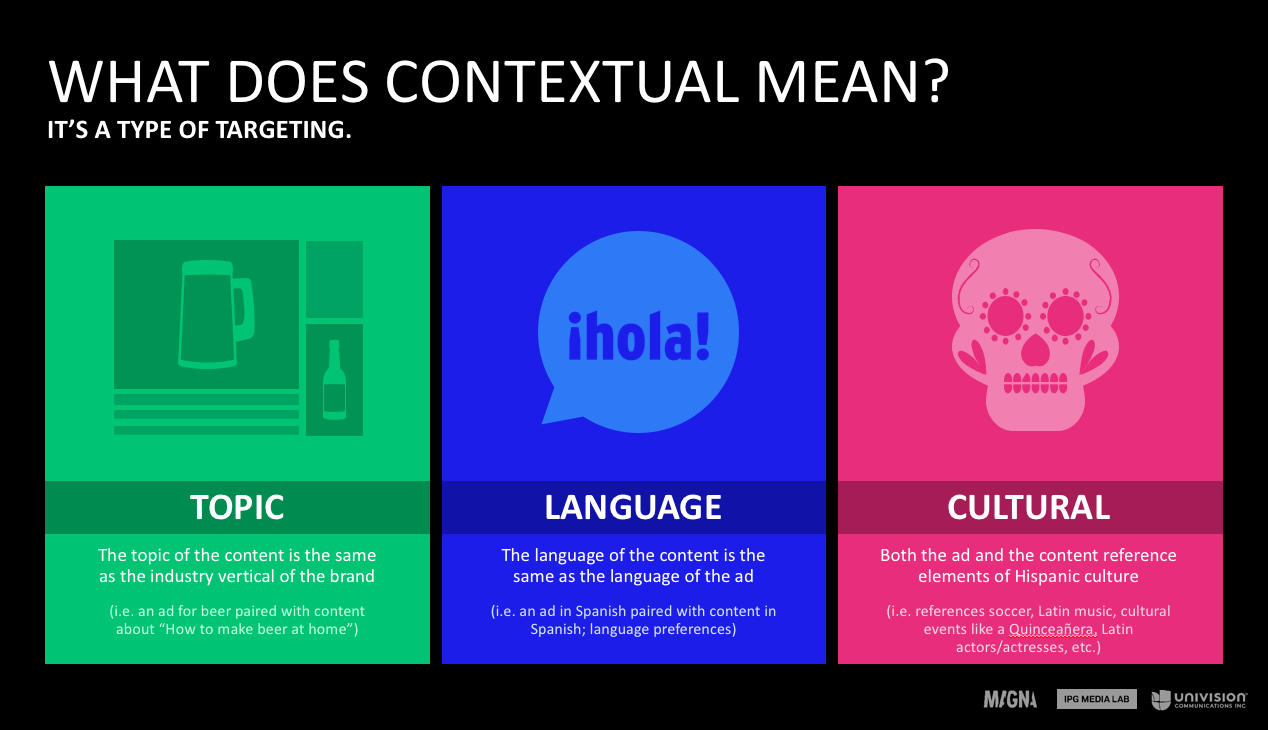
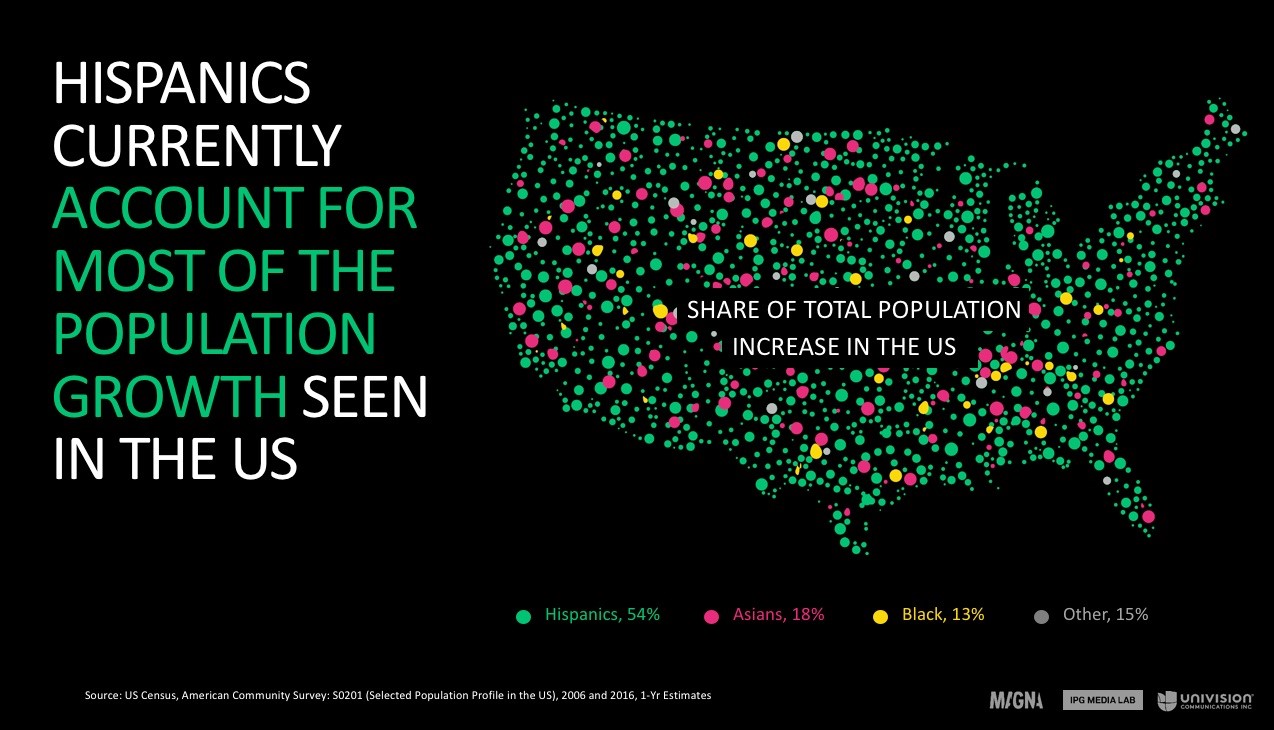
Hispanic spending is projected to grow 85% over the next 10 years and reach $1.7 trillion by 2020, which makes this market segment one of the most important consumer targets for advertisers.  But how can marketers meaningfully connect with Hispanic consumers?  MAGNA and Univision have just released the results of a seminal research study titled "Marketing to the Hispanic Mindset" that measures the impact of contextual targeting (topic, language and culture) in digital video ad experiences.

Among other key insights, the study revealed that language and culture targeting in digital video ads can double the purchase intent of Hispanic consumers and increase their emotional connection with brands.

Surveying 6,000 Hispanic consumers, the study is the first of its kind to include mobile face-tracking in Hispanic research.  "We wanted to understand the role of language and context in digital advertising, including mobile and emotional facial coding to gain deep insights," said Roberto Ruiz, Executive Vice President, Insights and Analytics at Univision.


I sat down with Ruiz and Kara Manatt, Senior Vice President, Intelligence Solutions Strategy at MAGNA to delve more deeply into how the right targeting can connect brands with the Hispanic consumer.

Charlene Weisler:  Tell me how targeting can impact ad receptivity among Hispanics.

Kara Manatt:  We tested three types of targeting.  The first, Topic targeting -- when the topic of the ad is related to the topic of the content it appears in front of -- replicated what we tested among a general audience.  An example would be content on the health benefits of owning a cat that has a pre-roll ad for a cat food brand.  Obviously, there is a strong connection between the product being advertised and the editorial context in which it appears.

The second type that we explored in the study was Language targeting, which is when the language of the ad is matched to the language of the content.  For example, Spanish-language pre-roll ads that run into Spanish-language video content.


Cultural targeting was the third area; that is when an ad speaks to Hispanics through culture.  This can be a bit trickier to nail down since there are a lot of different ways to do that, such as through music, food and specific Latino events.  In Cultural targeting you align an ad that connects on a cultural level with content that does the same thing.

Weisler:  What were the major takeaways from the study?

Manatt:  The key findings for us were the big differences in persuasion metrics, particularly the really important and hard-to-move metrics like brand favorability and purchase intent.  Using language and cultural targeting to double purchase intent was the No. 1 key takeaway; we saw double the impact from merely changing the environment and not the ad.  The other takeaway was that it helps build a relationship between the brand and the consumer.  Hispanics are particularly sensitive to cultural messaging from an advertiser.  They are receptive to the brand going the extra mile by speaking to them in their own language and making that cultural connection.  This is not lost on the consumer.  Again, notably you are not changing the ad.  You are only changing the environment.


Roberto Ruiz:  We also gathered a lot of data on mobile targeting.  When we used the emotion tracking part of the study and we looked at the percentage lift in emotion due to cultural targeting versus no targeting, we saw that with cultural targeting there was more emotion expressed by the people watching the ad.  So, the fact that cultural targeting had a huge impact in emotion on ads received via computers and mobile -- in mobile we saw 60% more emotion being expressed by the Spanish dominant and bi-lingual Hispanics -- told us that cultural targeting is creating a visceral connection and driving emotion.  We know that in branding, emotional connection is really what drives equity.

Weisler:  Were there any surprises in the results?

Manatt:  It's not often we find that what is good for the brand is something that is also good for the consumer.  It is good for brand metrics, but it also leads to a better overall media experience for the consumer.

Ruiz:  It surprised me that Language targeting and Topic targeting performed the best on smartphones.  There is so little data on how to create effective mobile ads that I thought this finding was very interesting.

Weisler:  What are your recommendations to advertisers?

Ruiz:  We say that these are building blocks -- each step leads to a deeper and more profound relationship to the consumer.  Don't limit yourself to Topic targeting and Language targeting.  Take it all the way to Topic, In-Language and Culture to have very powerful digital ads.  You will see the brand KPIs go up.  This research surveyed 6,000 consumers -- a large study with a representative sample that includes non-self-reported data (data that was collected by an app) and that builds on these three targeting steps.  You can see the lift from each one.  But if brands want to do cultural targeting they have to do their homework.  They have to understand the consumer insights that connect the brand to the category, to the consumer and create a solid, culturally targeted creative ad.

This article first appeared in www.MediaVillage.com

Mar 19, 2017

Get Ready for the ARF Annual Conference on March 20th and 21st 2017


The ARF is holding their annual conference next week that will herald not only the arrival of new President and CEO Dr. Scott McDonald, it will also highlight the continuation and enhancement of three major research initiatives on mobile advertising research and the impact of advertising pod context.

New Leadership
According to the press release, Scott McDonald has held senior research positions at Time Inc., Time Warner, and Conde Nast, working closely with all five of The ARF's constituent groups – media, advertisers, agencies, research companies and ad tech. In a meeting with the press this past week, he explained that he comes to the ARF at “a critically important time for the media industry, partly because technological change has introduced at least a doubling of the number of consumer touchpoints available to marketers - many of which don’t involve media at all.  This has fundamentally changed how we think of ‘audience’ and has made the term more ambiguous and confusing than it was 10 years ago.”

He sees the ARF as focused on a range of issues from “methods for message development and understanding the consumer to highly technical problems of cross platform measurement, advertising effectiveness attribution and ways of integrating big data. These technical topics are very wonky but consume us because they remain unresolved problems for the industry.”

We are entering a complicated world where there are many challenges to the ad-supported media business model. He noted, “Going into the Internet of Things, you are going to have more and more marketing opportunities to connect with consumers in conditions that are devoid of media like on the fitbit, driving in your car, etc. The nature of advertising is changing in response to changes in technology and consumer behavior. Getting a clear view of consumer behavior and advertising impact has never been more important, more difficult or more complex.”

ARF Research Initiatives
As the industry gets more complicated, it is a great time for research. The ARF is continuing on some major research initiatives as well as introducing new ground-breaking work from member companies and suppliers. “One of the studies that will be talked about at the annual meeting,” explained McDonald, “is an effort by the ARF Research team, in collaboration with several of the member companies, to try to quantify the value of specific media context.  How is the performance of an ad affected – for better or worse – by its media environment?  How is it affected by the other ads around it?”

Jasper Snyder, EVP Research and Innovation outlined the continuation of three major research initiatives by noting that, “We have studies on creating effective mobile advertising, optimizing mobile research quality through the impact of emojis in mobile surveys and exploring the ROI impact of different types of context effects.” Previous How Advertising Works studies by the ARF have focused on the ROI of cross-platform advertising, and using neuroscience to understand how brands are built in the brain. “These studies not only quantified the impact of cross-platform advertising for the first time but also established, through neuroscience, the ways in which advertisers can optimize creative to take advantage of cross-platform effects," he continued. 

“Biometric and neuroscience measurement has proven that optimizing creative to a specific platform provides a great opportunity to boost ad effectiveness,” noted Dr. Manuel Garcia-Garcia, SVP, Research and Innovation, who added, “The challenge we face now is how to improve mobile ad creative so they are perceives as valuable and non-disruptive by the users.”

“One of the jobs of the ARF is to lead with quality research that is pivotal to the industry,” concluded McDonald, “Not only in providing quality research but also trying to provide conceptual clarity that makes it easier for all participants – media companies, ad agencies, advertisers and research companies - to be clear about where they are operating and which questions are being addressed.”

This article first appeared in www.MediaBizBloggers.com