Showing posts with label pod performance. Show all posts

Jun 19, 2019

Changing the Advertising Model. An Interview with Hulu’s Peter Naylor


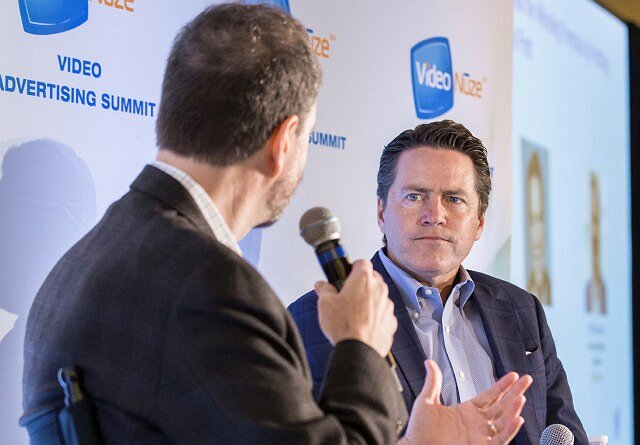
Hulu’s Peter Naylor on Changing the Advertising ModelHulu continues to keep up with the times. When it first launched 11 years ago it was 100% desktop delivered. Now, according to Peter Naylor, Hulu’s Senior Vice President of Ad Sales, the company is 6% desktop, 80% living room and 100% subscriber driven.


“It’s all about choice and control,” he explained at the recent VideoNuze conference, with three different types of subscription services depending if you want ad free or not and multi-member access. Naylor calculated that 82 million people watch Hulu per month with 70% opting for the ad supported version of the service.

Hulu’s mission is relevancy and being respectful of the viewer experience. “Our subscribers come to us for content,” he explained, and they have ample choice with an inventory of 85,000 TV episodes. Disney recently announced that they are planning to completely acquire Hulu. For Naylor this offers great opportunity for the streaming service. “Control by one owner enables us to move faster and invest more in content,” he stated, “Our international expansion will accelerate. So we will keep doing what we are doing. We have the wind in our sales.”

Ad Pod Length Consistency
Part of Hulu’s success has to be its commitment to consistency and standardization in a world of multiple choices for both the viewer and the business. In striving for consistent experiences for viewers, Naylor has had to address the inconsistencies in ad pod lengths. “There was a time when different shows had different ad pod lengths,” he explained, “but now all pods are capped at 90 seconds or less with a countdown clock. And we don’t put ads where you don’t expect them to be. We try to be thoughtful and also add as much value as possible.”

Further, “100% of our advertising is addressable and we only charge for ads that are completed.” Naylor and his team are data focused and also pay great attention to social media to discern what consumers find valuable and objectionable in their viewing experiences. “You can’t jam more ads in because you need to make a number,” he warned, because viewers have a lot more content choices.

New Types of Ad Deliveries
“The more time people view on demand, the more likely they are to have two to three services and the more time they spend online,” he noted. With multiple subscriptions, Hulu has to be very careful about ad overload and irrelevancy. “We are trying to figure out non-intrusive ad models.” To that end, Hulu created pause ads which places a static contextual ad (like a coffee advertiser) on the screen when a viewer presses the pause button. They are also rolling out a binge watching ad product in fourth quarter for those who watch three or more episodes in a row. “We will identify ‘bangers’ and feed them contextual ads such as ‘Feed Yourself.’ We make the third episode commercial-free if you watch this 90 second ad. We want to reinvent the ad model.”

For Naylor, there exists a full spectrum of ad acceptance. “It doesn’t have much to do with age income or geography,” he noted, “It has to do with your culture and interests. We strive to make ads more relevant and when you use data properly, relevance skyrockets. There will always be ad avoiders,” he added, “but they are a minority.”

When asked how much an ad’s creative factors into Hulu’s decision about where and how to place an ad, Naylor responded, “Ensuring creative is relevant to the person watching is fundamental to a viewer-first advertising experience. A relevant creative means a better experience for the viewer and better results for the advertiser.”

The Future
Naylor’s view of the future is focused on a world of connectedness and expansion, courtesy of technological innovations. “I can’t imagine a scenario where every television household in America isn’t someday connected to an IP address,” he explained. “While I don’t know what percentage of TV advertising is going to become addressable in the next two years or how long it will take us to get to a fully addressable future, I know the market is undeniably going in one direction with the help of market forces like 5G, ATSC 3.0 and the rise of on-demand, OTT viewing.”

He sees Hulu’s dominant place in the media firmament. “Today Hulu is the largest fully addressable marketplace in OTT, offering brands the opportunity to target and reach valuable audiences that are no longer found in broadcast television or via MVPDs,” he stated, “We’re offering the best of both television and digital and brands are coming to realize that OTT should be their first stop for TV in their marketing mix.”

This article first appeared in www.MediaVillage.com


Sep 21, 2017

Proven By Research, Fans Respond Well to Fewer Ads. An Interview with Turner’s Jeff Grant.


It’s not surprising that viewers prefer to see fewer ads. But Jeff Grant, Senior Vice President of research for Turner’s Emerging Consumers group has proven through research that fewer ads actually benefit  the network and advertisers as well. 

Grant is a Turner Research veteran, with 21 years at the company. In that time, he’s had opportunities to oversee research for a collection of networks – starting at CNN and gradually adding oversight for each of Turner’s emerging consumers brands, Cartoon Network, Adult Swim, truTV and Boomerang, or, as he describes them “all the brands that we have that specifically focus on the Millennial generation, as well as what we call the Plurals generation .” (Plurals are also known as Gen-Z - the generation that follows the Millennials. Grant believes that “’Gen Z’ means nothing,” and Plurals is the term, he adds, “that is also used by such companies Insight Research and Magid Research.”)
In late 2015, one of those “Plurals networks”, truTV, announced a large scale effort to drastically cut advertising by half during traditional prime time hours, starting in fourth quarter 2016. It was all part of a larger company effort to, per their brand tagline, “re-imagine television” and deliver an optimal experience for fans. 

With a year of execution under their belt, Grant and the larger research division now have the ability to share with advertisers what it all means for them. Their research focused on the impact of a lower ad load on truTV and how less clutter improved the viewing experience for fans of the programming, delivering increased ad attention, retention and enjoyment. What also stood out about the research was a deeper dive into purchase intent. “We found that when we provided fans more of what they want - more content and fewer ads - truTV delivered what was good for both the viewer and our advertising partners,” he explained. 

He shared more on the study and its impact in our recent conversation:

Charlene Weisler: Tell me about your recent study.

Jeff Grant: The basic reason behind the study is that we are trying to serve our fans especially the younger generations - Plurals and Millennials - the most optimal experience in media. Our brands are very much about the user experience, keeping the fans happy – and that extends not only to the content but also to the advertising formats. So, Chris Linn, who heads up truTV, took a chance and cut the ad load in half, and gave ourselves enough time and content to evaluate if it would make for better results. What we saw in the variety of categories that we tested was that there was greater attentiveness and greater ad recall especially the day after and higher purchase intent compared to previous studies. And viewers rated the program more engaging and better paced than the same episode with a full commercial load.

Weisler: Does that mean the same number of minutes per hour and just shorter pods?

Grant: No. It is half the number of ads you would see in the normal time in primetime. The ad load has essentially been cut in half. That also meant our production teams would need to ramp up the amount of content per hour as part of our original series. So, it also ends up a win for the viewer who gets more story. 

Weisler: What categories did you test and what metrics did you use?

Grant: We measured incremental sales on advertising in the soft drink category, the QSR category and the Snacks category. We found that there is between 4 and 16 times higher incremental sales among viewers that watched limited commercial formats on TruTV than among those who watched competitive networks. It was very efficient for the advertiser. For the QSR category we used Nielsen NBI which matches household credit card usage purchase data with TV viewing. For the consumer package goods category we used Nielsen Catalina Systems which matches grocery loyalty card purchase data with TV viewing. There were a variety of advertisers. We did several studies within the categories.  We examined well-known brands and the results came back with a strong story for all of them.

Weisler: Do you think these results will translate into your other networks?

Grant: Yes, it’s worth noting that TNT is also evaluating the effects of limited ad loads within its new original series, and experiencing similar results. The general principle behind this – that viewers respond better to fewer ad messages in a lower clutter environment – is fairly universal. It lends itself to serving the fan base and what it is that the viewer is expecting as they consume content across the variety of platforms that are out there.

Weisler: Did you look at other Nielsen measurements such as C3 and C7?

Grant: Yes. We are adding ratings growth not only among new viewers to the network’s content, time spent viewing per premiere telecast went up about +18%. truTV C3 delivery grew +17% across all premieres for 18-49 year olds and during that same period, our Live +3 grew +12% suggesting that commercial minutes grew faster than the programming itself. That is a difference in commercial index growth of +3%. With other metrics, truTV had +10% deeper engagement from length of tuning for P18-49 and +30% higher brand unaided ad recall among 18-49 year olds versus traditional pods.

Weisler: How has this been received at the agencies?

Grant: To my knowledge, very well. Any time that you can tell a client that people are sticking around and remembering your messaging, especially the following day, is a strong argument to come back. To be able to share purchase intent with our partners is critical as our sales division is eager to evolve to outcome-based conversations. So what we’re able to tell them based on the research we have done so far is that we have seen +30% higher 18-49 unaided ad recall and +7% 18-49 intent to purchase. For 18-34 it was even higher +15%. That is the average uplift across all advertisers lower ad load vs higher ad load. Ads in truTV limited commercial interruptions deliver anywhere from 4x to 16x more sales of the advertising product compared to the competition. So even the worst category sees a 4x lift. The bottom line is that this research delivers what matters most-evidence that limited ad formats delivers higher ad recall, purchase intent and actual purchases, better than the competition.

This article first appeared in www.MediaVillage.com

Feb 17, 2017

24-Hour TV Advertising: Finding the Right Place and the Right Time for Your Campaign

For those of us who are old enough to remember end-of-broadcasting-day test patterns, today’s 24-hour TV may seem like overkill. But the new never-ending schedule poses both opportunity and dilemma.

Programming genres that were once coalesced into specific parts of the day (such as Saturday-morning cartoons) can now be viewed 24 hours a day, any day of the week. Primetime traditionally was the slot with the highest-quality programming because it garnered the most view and commanded the highest cost per impression (CPM). But now, high-quality programs can be viewed at any time and in any place.

Today’s viewing patterns are very often time-shifted. For advertisers interested in reaching a specific consumer, what was once a relatively clear choice of inventory has become a much more expansive, sophisticated, and complicated playing field. So how does 24-hour TV programming affect advertising schedules? And how can advertisers maximize budgets while still reaching the right consumers?

Avoid Clutter

Commercial pod length and the frequency of pods can reduce viewer engagement and attention. “I think everyone would agree that if you look at the amount of commercials that are inside most programs today, we have really overstuffed the bird,” admitted Michael Strober, EVP client strategy and ad innovation and co-head of Turner Ignite.

Advertising messages get lost in the clutter, savvy advertisers seek not only the right programming, but less cluttered programming, too. Even many TV networks realize the negative impact of clutter and are making efforts to reduce it. “Lighter commercial loads are the right balance,” Strober concluded.

Read the full article on the Videa blog.

Nov 17, 2016

TV-Style Commercial Format: Are Longer Lengths Here to Stay?

There has been some discussion recently at a range of media conferences regarding commercial format and the evolution of the advertising message. What is the most effective ad length and type in this fragmented, device-driven programming environment? Are 30-second spots on the way out? Or does our ability to target audiences more effectively and programmatically require a consistent message across all platforms? There are two sides to this discussion: While shorter may be better for platforms with smaller screens, longer may be preferable in terms of effectively getting a message out.

Is There a Future for TV-Length Spots?

Although the 6-second content provider Vine is no longer around, today’s media environment still begs the question: Is there a future for TV-length spots—such as 30 seconds—at a time when content is becoming snackably short? For some, the answer is no. But for others, not only is the 30-second commercial format alive and well, it’s perfectly poised to transcend platforms, drive engagement, offer consistency, and improve reach and frequency for messages.

Please read the rest of the article on the Videa blog.

May 25, 2016

Turner’s Upfront – More Glitz, Programming and Data with Fewer Ads


With a stage designed by Atomic, a star cast that included Wolf Blitzer, Anderson Cooper, Charles Barkley, Conan O’Brien, Samantha Bee, Anthony Bourdain and even a CNN drone, the Turner Upfront was filled with energy, glitz and over 2,000 agency executives. It was quite a spectacle. 

After a crowd warm-up by Anderson Cooper, Conan O’Brien and Charles Barkley, things got down to business with a presentation by Donna Speciale, President of Turner Ad Sales. Her message was - more content integration, context, storytelling and therefore engagement and attention with less clutter. She spoke of her company’s efforts to merge the use of data and analytics with content creation, “We are offering more content, more solutions and bigger results. We are a data driven content creation company that puts consumers first.” 

Merging data driven solutions with content creation is something of a theme this upfront as other companies have also announced such initiatives. But in addition to this, Turner’s efforts also include a less cluttered environment by reducing the ad load. This is a bold and welcome move in an industry that has come to rely on more and more ads to meet their guaranteed advertiser commitments.  In addition, in a nod to the contentious issue of accurate digital content viewability, Speciale noted that when Turner talks about online views, they refer to a thirty second length, not three seconds. 

Speciale announced that “bold, engaging, less cluttered content” that are then matched to brands and “paired with smart data solutions” are all part of a new initiative at Turner called Turner Ignite. This is a powerful marketing platform where they will test, optimize and learn more about cross screen behaviors. “But,” Speciale added, “This isn’t new. We have been doing this type of targeting now resulting in $50 million in media spend. And it is a pure audience guarantee. We offer provable ROI guarantee outcomes.”
Turner is applying more digital data to TV and putting it to work with their brands. One such initiative is the roll-out of Team Coco Digital Studios for branded content. This will help in the development of native content for advertisers during breaks with branded storytelling. It is possible that such content can help in maintaining viewership through the breaks in addition to their shorter pod lengths.

The full program included sizzle reels and programming announcements for News, TBS, TNT, TruTV and Sports and highlights from other Turner properties such as Adult Swim. Highlights include a new Wyatt Cenac comedy, People of Earth, about a support group of people who have had alien encounters for TBS, Animal Kingdom, a drama starring Ellen Barkin and The Alienist, a crime drama set in late 1800s New York City for TNT. 

Delivery of quality content with a lower ad load and the ability for greater brand integration for advertisers could lead to Speciale’s hope for higher ad rates. "Branded storytelling and shorter breaks have driven significant performance lifts,” she said, “The experience is everything."

This article first appeared in www.MediaBizBlogger.com

Jul 15, 2009

Q&A Interview with Daniel Fischer, President of the Solve It Group

Daniel Fischer, President of the Solve It Group, is one of the foremost thinkers and researchers on commercial pod behavior. He has worked in all sides of the business from Discovery Networks on the programming side, Nielsen Research on the vendor side and Time Warner on the MSO side. But his current work on approaches to increase commercial and program ratings through applied cognitive neuroscience impacts the entire business model. In addition to trans company pod analysis, Daniel's company also consults with kids programmer, qubo Ventures.

I interviewed Daniel in July 2009. Here are five videos comprising the full interview:


Video                                       (length)
Viewing Changes                      (4:14)
Pod Performance                       (6:34)
Predictions                                 (2:17)
CTAM                                        (1:54)
Clients                                        (3:49)


CW: In the span of your career, what would you say has been the most dramatic change in the media landscape?

DF: I know we are going to talk about today’s buzz – the use of online and its effect on media. But over the past thirty years, I think the most major change occurred as cable was distributed across the nation. For the first time,  consumers had much more choice: 30, 40, 60 and eventually 500 channels. And this changed people’s viewing behavior in a radical way. Broadcast networks lost at least 50% of their share and numerous new brand names were born like MTV, CNN, Discovery and the like. To date, that was a much more profound change than any effect online has had on video consumption.


Charlene Weisler interviews Daniel Fischer, President of the Solve It Group. Daniel shares his thoughts about changes in the media landscape.


Charlene Weisler interviews Daniel Fischer, President of the Solve It Group. Daniel shares his thoughts about commercial pods and pod performance research.


Charlene Weisler interviews Daniel Fischer, President of the Solve It Group. Daniel shares his thoughts about the future of media.


CW: Daniel, tell me about your work with CTAM.

DF: CTAM has been a great organization to be associated with. I’m on the CTAM Research committee and volunteer my time on a number of interesting studies. CTAM is in a position to do very large comprehensive research studies and then make them available at very reasonable prices to their members – a consortium of programmers and MSOs. We are just completing a huge study-  The Three Screen Experience” -looking at video usage on television, mobile devices and the pc. Really groundbreaking stuff. One of my favorite smaller studies looked at Apple TV. As that platform began to be sold we were curious about its impact on the TV experience. And of course that discussion involved online usage as well. A couple of years ago I was fortunate to work on an on-demand study which was also very comprehensive and gave great insights to the industry. So I greatly encourage all companies to take advantage of this research. It is a great way, for an economical price, to gain knowledge on the largest, most important issues that the industry faces.


Charlene Weisler interviews Daniel Fischer, President of the Solve It Group. Daniel talks about CTAM.


CW: You have done significant research in the behavior of the commercial pod. Can you share any of your findings with us?

DF: I started Solve It Group in 2005 about the time Nielsen changed the resolution of  ratings from quarter hour to minute by minute. I think we all knew that a portion of viewers were shifting during the commercial pod. But the minute by minute ratings proved that it was occurring and gave us layers of ways to understand that; whether we were looking at different demos, dayparts, program genres – anyway you could cut the data. So very quickly we learned that most drop-off occurs immediately in the first minute, some more in the second minute and then the pod tends to level out with the audience slowly returning. Also, there is a fair amount of variation – demographics , dayparts, program types. These affect the level of drop-off. And so my clients were people who gained this understanding for their nets and competitors.


CW:Are there any general words of advice to networks who want to raise the base of their commercial pod ratings?

DF: Well certainly all networks have been very active in testing different strategies. I think it has been supremely difficult for networks to migrate any of these ideas across all of their pods. Roughly speaking, a 24 hour network has about 30,000 pods per year which are servicing approximately 120,000 commercials, perhaps 20,000 promos. Huge volume on just one network. This led me to some work that is showing some very interesting promise. We began to research on the science side, coming up to speed on recent advances in cognitive neuroscience. Tremendous advances have occurred in the last few years. We were very interested in linking the world of science to a needed business application- increasing retention and improving programs during certain key moments. Over the last 18 months we’ve gained a very good understanding of “engagement”. For our work, engagement and attention are optimized by applying an understanding for how the brain processes audio-visual streams. We have been fortunate to develop and test these ideas with a number of major media companies and the results are quite promising.


Charlene Weisler interviews Daniel Fischer, President of the Solve It Group. Daniel shares his thoughts about recent projects.